

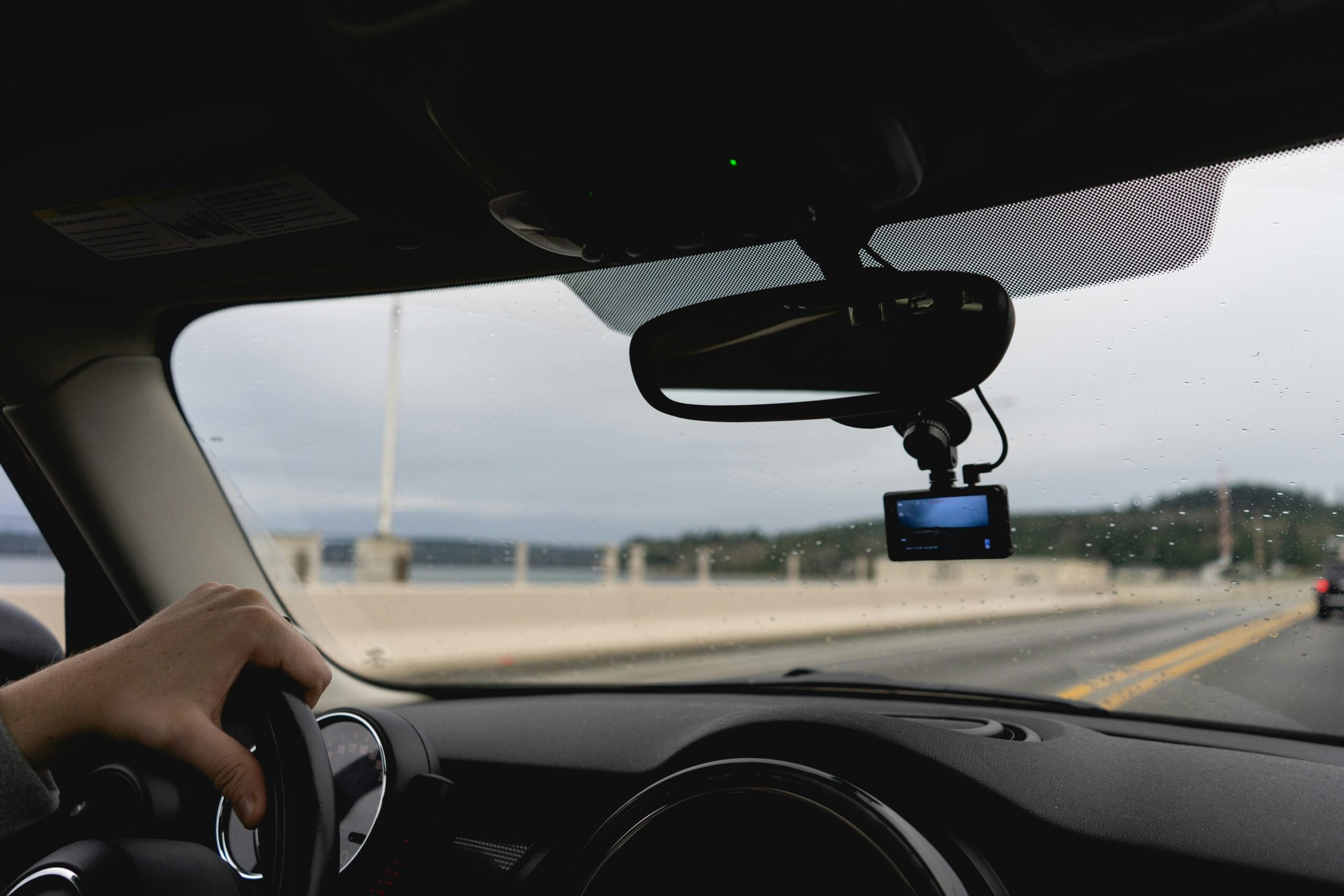
Your dash cam may have captured the accident, but is that footage actually helping your case, or could it be hurting it? Dash cams have become increasingly common on Pennsylvania roads, and when a crash happens, many drivers assume the video automatically proves what happened. The reality is more complicated. Footage that seems to tell a clear story can strengthen a claim, undermine it, or open the door to arguments you never anticipated depending on what it shows, how it was recorded, and what you do with it next.
Before you post it online, send it to the insurance company, or assume it tells the entire story, it is worth understanding how Pennsylvania law actually treats dash cam footage. This guide breaks down when dash cam video strengthens an injury claim, how it helps establish fault, the common mistakes that can weaken a case, what happens when the footage does not tell the whole story, and whether you are required to share your recordings. At GLS Injury Law, our attorneys have recovered more than $120,000,000 for injured clients across Lancaster, York, and Chester Counties, and we know how to use, and challenge, video evidence.
Are Dash Cams Even Legal in Pennsylvania?
Yes — dash cams are legal to use in Pennsylvania, but with two rules that matter a great deal once a crash and a claim are involved:
- Mounting and obstruction. The camera must be installed so that it does not obstruct the driver’s view or create a distraction. A unit blocking the windshield sightline can itself become a basis for an argument that the driver was negligent.
- The audio-consent trap. This is the one that surprises people. Pennsylvania is a two-party (all-party) consent state under the Wiretapping and Electronic Surveillance Control Act, 18 Pa. C.S. § 5703. Recording the video of a public roadway is generally lawful, but recording the audio of private conversations, including people talking inside your own car without the consent of everyone involved, can violate the Wiretap Act, which is a third-degree felony.
Pennsylvania requires the consent of all parties to record a private oral communication. The practical fix is simple: either disable your dash cam’s audio function or tell every passenger that audio recording is on. If audio was captured unlawfully, a court may exclude the entire recording, video and all, as the fruit of a Wiretap Act violation, which is exactly the kind of self-inflicted wound that turns a helpful video into a useless one.
When Dash Cam Footage Strengthens Your Injury Claim
When it is recorded and handled correctly, dash cam footage can be one of the most powerful pieces of evidence in a Pennsylvania car accident case. Unlike witness memories, which fade and conflict, video is an objective record of what happened. It can help in several specific ways:
- Establishing fault. Footage can show the other driver running a red light, blowing through a stop sign, crossing the center line, following too closely, or making an illegal turn –all captured objectively, in real time, with no spin.
- Capturing the seconds before impact. Speed, lane position, signal use, and reaction (or lack of it) in the moments before a crash are often the entire ballgame in a disputed-liability case. Dash cam video preserves them.
- Documenting conditions. Weather, road hazards, lighting, traffic signals, and construction zones at the exact time of the crash are all captured — details that are impossible to reconstruct later.
- Countering false narratives. When the other driver changes their story or the insurer claims you were at fault, footage that contradicts them protects your credibility and shifts the dynamic of the negotiation.
- Corroborating your injuries and the force of impact. The violence of a collision, visible on video, can support the seriousness of the injuries you are claiming.
- Strengthening settlement leverage. Clear video of the other driver’s negligence often moves an insurer toward a fair settlement faster because the carrier knows exactly what a jury would see.
In a case where liability is contested, strong dash cam footage can be the difference between a denied claim and a full recovery. An experienced car accident lawyer knows how to present that footage to maximize its impact.
How Footage Actually Gets Admitted: Relevance, Authentication, and Preservation
Having a video of the crash does not automatically mean it can be used. To be admissible in a Pennsylvania court, dash cam footage generally must clear three hurdles:
- The footage must relate directly to the crash — showing the events leading up to, during, or immediately after the collision.
- You must be able to prove the footage is genuine and unaltered. That means preserving the original file with its metadata — the embedded data showing recording date, time, device information, and whether the file has been modified — and being able to establish a chain of custody documenting who handled the footage and when.
- Proper preservation. Original files must be kept intact. Re-saving, converting, renaming, trimming, or running the video through editing software can strip metadata or raise questions about tampering — any of which can jeopardize admissibility.
This is why what you do with the footage in the first days after a crash matters so much. The most common way good footage becomes unusable is not through a court ruling, rather a well-meaning driver editing, compressing, or re-sharing the file until its authenticity can be questioned.
Common Mistakes That Can Weaken — or Destroy — a Case
Dash cam footage cuts both ways, and the mistakes below routinely turn an asset into a liability:
Mistake 1: Posting It on Social Media
The instinct to post crash footage online is understandable and almost always a mistake. Once the video is public, the insurance company and defense lawyers will scrutinize every frame for anything that helps them — your speed, your reaction time, a glance away from the road. Public posting can also raise authentication questions and hand the other side a copy to analyze before your own attorney has assessed it. Keep the footage private.
Mistake 2: Sending It Straight to the Insurance Company
Handing your raw footage to an insurer, yours or the other driver’s, before an attorney reviews it is risky. The footage may contain something that seems harmless to you but that the insurer will use to assign you a share of fault. You are generally not required to volunteer your dash cam footage to the other driver’s insurer, and you should never do so without legal advice first.
Mistake 3: Editing, Trimming, or “Cleaning Up” the Video
Any alteration, even well-intentioned trimming to “just the relevant part,” can destroy the footage’s evidentiary value by stripping metadata and creating authentication problems. Preserve the complete original file exactly as recorded.
Mistake 4: Letting the Footage Auto-Delete
Most dash cams record on a loop, overwriting old footage within hours or days unless the file is saved. After a crash, the single most urgent technical step is to remove the memory card or save and back up the file immediately, before the device records over it.
Mistake 5: Recording Audio Without Consent
As covered above, capturing in-car conversations without everyone’s consent can violate Pennsylvania’s Wiretap Act and may render the whole recording inadmissible. If your camera records audio, address consent or disable the audio.
Mistake 6: Assuming the Footage Tells the Whole Story
A dash cam has one fixed point of view and a limited field of vision. It may miss what happened to the side or rear, the other driver’s conduct before entering frame, or context that changes the interpretation of what is visible. Overconfidence in partial footage can lead a driver to say or do something that the full picture later contradicts.
What Happens When the Footage Doesn’t Tell the Whole Story
Dash cam footage is powerful, but it is rarely the entire case. Because a single forward-facing camera captures only one angle, the video may be ambiguous, incomplete, or even appear to cut against you on first viewing while a full investigation tells a different story. This is where Pennsylvania’s modified comparative negligence rule (42 Pa. C.S. § 7102) becomes critical: your recovery is reduced by your percentage of fault and barred entirely if you are more than 50% at fault, so the other side will use any frame of footage to push fault onto you. A skilled attorney places the footage in context with the evidence around it.
That fuller picture is built from the police report, physical evidence at the scene, vehicle damage patterns, witness statements, the other driver’s phone records, traffic, and business surveillance cameras, and, where needed, accident reconstruction experts. Footage that looks unhelpful in isolation often becomes favorable once it is synchronized with these other sources; and footage that looks decisive can be properly limited so it is not over-read. The job is to make sure the video is interpreted accurately and completely, not in the cropped, worst-case framing the insurer prefers.
Are You Required to Share Your Dash Cam Footage?
This is one of the most common questions — and the answer depends on who is asking:
- The other driver’s insurance company. You are generally not required to proactively hand over your dash cam footage to the at-fault driver’s insurer, and you should not do so without consulting an attorney first. Anything you volunteer can be used against you.
- Your own insurance company. Your policy likely contains a cooperation clause that can require you to provide relevant information to your own insurer. How and when to do that is best handled with legal guidance so the footage is presented in proper context.
- During litigation (discovery). Once a lawsuit is filed, dash cam footage is generally discoverable, meaning the opposing party can formally request it and you may be required to produce it. Critically, this also means you have a duty to preserve it. Deliberately deleting or altering footage you know is relevant can constitute spoliation of evidence, which in Pennsylvania can lead to sanctions and an adverse-inference instruction telling the jury to assume the destroyed evidence was unfavorable to you.
- Law enforcement. Police in Pennsylvania generally cannot demand your dash cam footage at the scene without consent, but they can request it or obtain it by subpoena during an investigation. For example, if the other driver is suspected of DUI. If a criminal investigation is involved, get legal advice on how that interacts with your civil claim.
The through-line: you control the footage, but you also have a legal duty not to destroy it once a claim is foreseeable. The safest path is to preserve the original, keep it private, and let your attorney manage what gets shared and when.
A Note on Other Video Evidence: Police and Surveillance Footage
Your own dash cam is not the only video that may exist. Police vehicle and body-worn camera footage, traffic cameras, and surveillance video from nearby businesses can all capture a crash, and these sources are often decisive in a truck accident or other serious case. But this footage disappears fast. Pennsylvania’s Act 22 of 2017 sets a strict 60-day window to request police audio-visual (dashcam and bodycam) recordings, and private business surveillance is frequently overwritten within days to weeks. An attorney can send preservation letters and formal requests immediately to lock down this evidence before it is gone. It’s work that is most effective when it begins within days of the crash.
What to Do With Dash Cam Footage After a Pennsylvania Crash
If your dash cam captured your accident, a few steps protect both the footage and your claim. Our broader guide on steps to take after a car accident covers the full checklist; the footage-specific essentials are:
- Save and back up the original file immediately, before the camera loops over it. Remove the memory card if necessary.
- Do not edit, trim, rename, or convert the file. Preserve the original with its metadata intact.
- Do not post it on social media or send it to anyone before an attorney reviews it.
- Do not volunteer it to the other driver’s insurer. Decline politely and refer them to your attorney.
- Address audio consent — if the recording captured in-car conversations, tell your attorney so the Wiretap Act issue can be evaluated.
- Contact a car accident attorney promptly, both to assess your footage and to preserve the other video evidence that disappears within days.
Why Choose GLS Injury Law
Video evidence is most effective when attorneys move quickly and understand the technical and legal rules. Whether your case is a car crash, a motorcycle accident, a garbage truck or other commercial truck accident, or any other serious personal injury claim, our approach is built on a fast, thorough investigation.
- $120,000,000+ recovered for injured clients, including multiple multi-million-dollar awards utilizing a vehicle’s dash cam footage
- 99% case win rate
- Voted Best Law Firm in Lancaster County 13-years running by Lancaster County Magazine readers
- Exclusive focus on personal injury and workers’ compensation
- Hundreds of five-star Google reviews
- Available 24/7 — evenings, weekends, and holidays
- We come to you: home, hospital, or rehab facility
- No fee unless we win
Frequently Asked Questions
Usually yes, if it is relevant, authentic, and unaltered. The footage must relate to the crash, you must be able to prove it is genuine (through preserved metadata and a chain of custody), and the original file must be intact. Footage recorded exclusively on private property, or video that captured in-car audio without all-party consent, can raise admissibility problems. Having an attorney handle the footage protects its evidentiary value.
Yes. Pennsylvania is a two-party (all-party) consent state under the Wiretapping and Electronic Surveillance Control Act, 18 Pa. C.S. § 5703. Recording video of a public road is generally legal, but recording private conversations — including passengers talking in your car — without everyone’s consent can be a third-degree felony and can render the recording inadmissible. Either disable your dash cam’s audio or inform passengers that audio is being recorded. (Be aware that some online sources wrongly call Pennsylvania a one-party consent state — it is not.)
You are generally not required to volunteer your footage to the other driver’s insurer, and you should not do so without legal advice. Your own policy’s cooperation clause may require you to share relevant information with your own insurer. And once a lawsuit is filed, footage is generally discoverable — meaning it can be formally requested and you have a duty to preserve it. Deleting relevant footage can be treated as spoliation of evidence, with serious consequences.
Yes. If the video shows you speeding, glancing away, reacting late, or otherwise contributing to the crash, the insurer will use it to push fault onto you under Pennsylvania’s modified comparative negligence rule — which reduces your recovery by your share of fault and bars it entirely above 50%. Footage can also hurt you if it is posted publicly, edited, or recorded with unlawful audio. This is exactly why you should have an attorney review the footage before anyone else does.
Not long, which is why fast action matters. Pennsylvania’s Act 22 of 2017 sets a 60-day window to request police dashcam and bodycam footage. Private business surveillance video is often overwritten within days to weeks. An attorney can send preservation letters and formal requests immediately to secure this evidence before it disappears.
Nothing up front. We handle every car accident case on a contingency fee basis — you pay no legal fees unless we recover compensation for you. The initial consultation is always free. We can meet at our office, your home, a hospital, or a rehab facility throughout Lancaster, York, and Chester County.