
Liability is legal responsibility for harm. A party that is liable for an injury is the party the law requires to compensate the person who was hurt. In most injury cases liability is based on negligence, but Pennsylvania also recognizes liability without fault and liability for someone else’s actions.
“Who’s liable?” is really two questions: who caused the harm, and who the law makes responsible for it. Those aren’t always the same person — and the difference is often where the money is.
Types of Liability
Negligence-based liability
The most common type: a party is liable because their carelessness caused the injury. The four elements of negligence — duty, breach, causation, damages — establish it.
Strict liability
Liability regardless of fault. Pennsylvania applies it most notably to defective products: a manufacturer can be liable for a dangerous product even without proof it was careless. Owners of certain dangerous animals and those engaged in abnormally dangerous activities can also face strict liability.
Vicarious liability
Liability for someone else’s actions. The classic example is an employer’s responsibility for an employee’s negligence on the job (“respondeat superior”). When a delivery driver causes a crash during a route, the company is typically liable too — and the company’s insurance is usually far larger than the driver’s.
Premises liability
A property owner’s responsibility for unsafe conditions on the property. See our dedicated premises liability page.
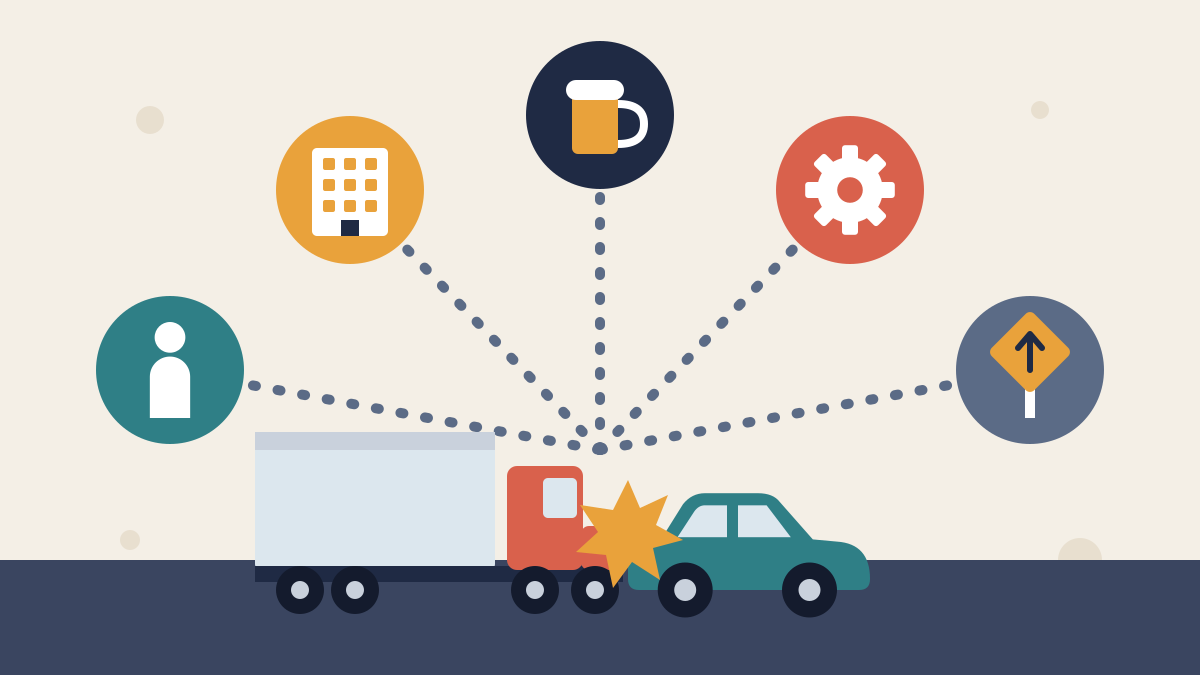
Who Can Be Liable for a Pennsylvania Car or Truck Accident?
Often more parties than people expect:
- The at-fault driver — the obvious one.
- The driver’s employer, if the driver was working (vicarious liability).
- The vehicle’s owner, if they lent it to someone they knew was unfit to drive (negligent entrustment).
- A bar or restaurant, under Pennsylvania’s dram shop law, if it served a visibly intoxicated person who then caused a crash.
- A manufacturer, if a defective part — brakes, tires, an airbag — contributed.
- A government agency, for a dangerous road design or missing signage, subject to strict notice rules and damage caps.
This is why truck accident cases in particular involve so much investigation: the driver, the carrier, the shipper, the maintenance contractor, and the manufacturer may all share liability, each with its own insurance.
Shared Liability
When more than one party is liable, Pennsylvania’s Fair Share Act generally makes each responsible for its own percentage of fault, with exceptions for defendants 60% or more at fault and for certain conduct like DUI. And your own share of fault reduces recovery under comparative negligence. Sorting out these percentages is a central part of any multi-party case.
Why Identifying Every Liable Party Matters
A claim is only worth what can actually be collected. If the at-fault driver carries Pennsylvania’s minimum coverage, a serious injury can exceed the policy many times over. Finding a liable employer, bar, or manufacturer — and the policy behind each — is frequently the difference between a fair recovery and a shortfall. It’s one of the most valuable things a personal injury attorney does, and it has to happen early, before evidence disappears.
Frequently Asked Questions
It means the law holds you legally responsible for the harm and requires you to compensate the injured person. Liability is usually based on negligence, but can also arise without fault (strict liability, such as defective products) or for someone else’s conduct (vicarious liability, such as an employer for an employee).
Yes, and it’s common. A driver, their employer, a vehicle owner, a bar that overserved them, and a parts manufacturer can all be liable for one crash. Pennsylvania’s Fair Share Act generally apportions responsibility by each party’s percentage of fault.
Generally yes, if the employee was acting within the scope of their job at the time. This is vicarious liability, and it matters because the employer’s insurance coverage is usually much larger than an individual driver’s.