

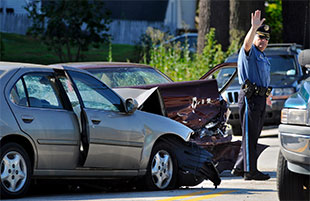
When a Pennsylvania driver buys auto insurance, an agent or website asks them to make a series of choices. Liability limits. Deductibles. Comprehensive and collision. And buried in the paperwork—sometimes presented as a single page to sign, sometimes glossed over with a one-sentence summary, are two of the most important coverages on any Pennsylvania policy: uninsured motorist (UM) and underinsured motorist (UIM) coverage.
Many drivers reject UM/UIM, reject stacking, or accept the lowest available limits to save a few dollars per month on the premium. In any minor fender-bender, the decision rarely matters. In any serious crash where the at-fault driver is uninsured, underinsured, or unidentifiable, the decision can be the difference between a fully compensated claim and absorbing tens of thousands of dollars in losses personally.
This guide explains what UM and UIM coverage actually pay, why turning them down in Pennsylvania is a costly mistake, how stacking can multiply your coverage, what to do when an insurer disputes a claim, and how Pennsylvania’s bad faith statute provides remedies that go well beyond the policy itself. At GLS Injury Law, our attorneys have recovered more than $120,000,000 for injured clients across Lancaster, York, and Chester County, maximizing the value of UM/UIM cases, even where the insurer initially refused to pay fairly.
Why UM/UIM Coverage Matters in Pennsylvania
Two facts about Pennsylvania auto insurance set the stage for everything else:
Pennsylvania’s Minimum Liability Limits Are Among the Lowest in the Country
Under 75 Pa. C.S. § 1786, every Pennsylvania driver is required to carry minimum liability coverage of just $15,000 per person, $30,000 per accident, and $5,000 property damage—what is known as the 15/30/5. Many drivers carry only the minimum. In a serious crash with surgery, hospital stays, missed work, and rehabilitation, $15,000 disappears in a single emergency room visit. When the at-fault driver carries only the minimum and your damages exceed it, the gap comes from somewhere, and the only somewhere available is your own UIM coverage.
Roughly 7 to 9% of Pennsylvania Drivers Are Uninsured Altogether
Despite the legal requirement to carry insurance, the Insurance Research Council and Pennsylvania regulators have consistently estimated that 7–9% of Pennsylvania drivers are operating vehicles without any insurance at all, with significantly higher rates in metropolitan areas like Philadelphia. Hit-and-run drivers add to that figure. When an uninsured or unidentifiable driver hits you, your liability claim against them is effectively worthless – the only meaningful source of compensation is your own UM coverage.
These two facts are why turning down UM/UIM is one of the most consequential mistakes a Pennsylvania driver can make. The premium savings are modest. The exposure when something goes wrong is enormous. A skilled car accident attorney can sometimes find creative coverage paths after a crash, but no legal strategy substitutes for adequate UM/UIM coverage in the first place.
What Uninsured Motorist (UM) Coverage Actually Pays
Uninsured Motorist coverage steps in when the at-fault driver has no liability insurance at all. Under 75 Pa. C.S. § 1731, Pennsylvania insurers must offer UM coverage to every policyholder, and the coverage applies in several common scenarios:
- Hit-and-run accidents. If the at-fault driver flees the scene and cannot be identified, your UM coverage treats the unknown driver as uninsured and compensates your injuries.
- Crashes caused by uninsured drivers. Despite the legal requirement, many Pennsylvania drivers operate vehicles without coverage. UM applies when the at-fault driver has no policy.
- Phantom vehicle crashes. Crashes caused by another driver’s actions- swerving, cutting off, forcing off the road, even when no contact occurs, may qualify, though specific policy language and corroborating evidence requirements matter.
- Insolvent insurer crashes. If the at-fault driver’s insurance company becomes insolvent before paying, UM coverage may apply.
- Crashes involving stolen vehicles operated by an uninsured driver.
UM coverage pays for economic losses from bodily injury, like medical expenses and lost wages, and, if you select the full tort option will cover non-economic damages, as well, like pain and suffering, emotional distress and loss of life’s pleasures. Property damage is typically handled through collision coverage rather than UM. The limits on UM cannot exceed your liability limits without separate purchase.
What Underinsured Motorist (UIM) Coverage Actually Pays
UIM coverage applies when the at-fault driver has insurance, but the policy limits are not enough to cover your damages. The math is simple: take your total damages, subtract the at-fault driver’s liability limits, and the gap is what UIM pays, up to your own UIM policy limits.
Because Pennsylvania’s minimum liability requirement is just $15,000 per person, UIM applies in a very large percentage of serious crashes. A driver carrying only the state minimum hits you. Your medical bills, lost wages, and pain and suffering total $150,000. After exhausting the at-fault driver’s $15,000, you turn to your own UIM coverage for the remaining $135,000. Without UIM, or with inadequate UIM, you absorb the loss yourself.
Pennsylvania UIM is generally an excess coverage: in most cases, the at-fault driver’s liability coverage must be exhausted before UIM coverage applies, and your insurer typically has a right of subrogation against the at-fault driver. The exhaustion requirement and subrogation rules make UIM claims procedurally more complex than they appear at first glance.
Think Twice Before Turning Down UM/UIM Coverage
Pennsylvania law requires insurers to offer UM and UIM coverage and to obtain a valid written rejection if you decline it. The rejection process exists precisely because the legislature wants drivers to make an informed choice rather than have the coverage quietly dropped from a policy. Even with that safeguard, many Pennsylvania drivers sign rejection forms during initial policy setup or renewal without fully appreciating the consequences.
Three reasons drivers commonly cite for rejecting UM/UIM, each of them misguided:
“I have health insurance, so I don’t need UM/UIM.”
Health insurance covers medical bills (subject to deductibles, copays, and out-of-pocket maximums). It does not cover lost wages. It does not cover pain and suffering. It does not cover loss of earning capacity. It does not cover loss of life’s pleasures. UM/UIM coverage can compensate you for the full range of damages a serious crash produces, not just the medical portion.
“I never drive far from home.”
Uninsured and underinsured drivers do not concentrate on highways. They exist on every road in Pennsylvania, including the residential streets you drive every day. The driver who runs a stop sign two blocks from your house is statistically just as likely to be uninsured as one on the interstate.
“It’s too expensive.”
UM/UIM coverage is among the least expensive coverages on a Pennsylvania auto policy. Adding $100,000 in UM/UIM coverage to a policy that already carries $100,000 in liability often costs a fraction of what comprehensive or collision coverage costs. The premium savings from rejecting UM/UIM rarely amount to much. The exposure from being uncovered is enormous.
Stacking: How Multiple Vehicles or Policies Multiply Your Coverage
Pennsylvania’s stacking rules under 75 Pa. C.S. § 1738 allow UM/UIM coverage to be multiplied in two distinct ways:
- Intra-policy stacking: If you have multiple vehicles on the same policy, your UM/UIM limits multiply by the number of vehicles. $100,000 UIM on each of three vehicles becomes $300,000 in stacked coverage.
- Inter-policy stacking: UM/UIM coverage from multiple policies in your household can combine — your auto policy plus your spouse’s separate policy, for example.
Insurers are required to offer stacking, and you can waive it in writing in exchange for a premium discount. Many drivers waive stacking without understanding what they are giving up. The Pennsylvania Supreme Court has substantially expanded driver protections around stacking. In Gallagher v. GEICO Indem. Co., 201 A.3d 131 (Pa. 2019), the Court struck down the standard “household vehicle exclusion” as a de facto waiver of stacked UM/UIM coverage. The decision arose from a crash where Brian Gallagher was injured by an uninsured driver, and the Court ruled the household exclusion in his policy violated Section 1738. The case has broad implications for any Pennsylvania household with multiple auto policies.
Stacking is most consequential in serious crashes. Motorcycle accident cases produced much of the early stacking case law, but the same rules apply to ordinary car drivers, and the analysis after a serious crash requires careful review of every household policy.
PA’s Bad Faith Statute: The Hidden Power Behind UM/UIM Claims
This is the section that separates UM/UIM cases from ordinary liability claims and is important for drivers to understand. Liability claims against the at-fault driver’s insurer are third-party claims; the insurer owes a duty of good faith to its own insured, not to you. UM/UIM claims, by contrast, are first-party contract claims against your own insurer. Your insurer owes you a contractual duty of good faith and fair dealing in handling the claim. When the insurer breaches that duty, Pennsylvania law provides remedies that go well beyond the policy limits.
42 Pa. C.S. § 8371
Pennsylvania’s bad faith statute, enacted in 1990, creates a private cause of action against insurers that handle first-party claims in bad faith. When a court or jury finds that an insurer acted in bad faith, the statute authorizes:
- Interest on the amount of the claim at the prime rate plus 3%, from the date the claim was filed
- Punitive damages against the insurer
- Court costs and attorney fees shift to the insurer
These remedies are in addition to the underlying claim amount. A successful bad faith case can transform a UM/UIM dispute from a stalled policy-limit fight into a multi-hundred-thousand-dollar or seven-figure recovery.
How Courts Decide Whether an Insurer Acted in Bad Faith
The Pennsylvania Superior Court in Terletsky v. Prudential Property and Casualty Insurance Co., 649 A.2d 680 (Pa. Super. 1994), established the foundational two-prong test for bad faith. The Pennsylvania Supreme Court later confirmed the framework in Rancosky v. Washington National Insurance Co. To establish bad faith, an injured policyholder must show:
- The insurer had no reasonable basis for denying, delaying, or limiting benefits, and
- The insurer knew or recklessly disregarded the lack of reasonable basis for its conduct.
Common factual patterns supporting bad faith findings include unreasonable delay in evaluating the claim, undervaluing damages without justification, failing to investigate adequately, misrepresenting policy provisions, applying invalid stacking waivers or household exclusions struck down by Gallagher, and demanding documentation already provided. None of these standing alone proves bad faith, but together they can, and Pennsylvania case law has developed extensively in favor of policyholders over the past two decades.
Common UM/UIM Denial and Dispute Tactics
Even with strong PA case law and statutory remedies, insurers routinely contest UM/UIM claims aggressively. The recurring patterns include:
- Disputing fault. Insurers argue that the at-fault driver was not actually at fault, that the victim contributed to the crash, or that the injuries were caused by something other than the crash.
- Disputing injury severity or causation. Soft-tissue injuries, concussions, and aggravation of pre-existing conditions are routinely challenged. Insurers request expansive medical authorizations to comb through years of records looking for any prior treatment they can attribute the current symptoms to.
- Disputing the exhaustion requirement. UIM coverage generally requires exhaustion of the at-fault driver’s liability limits first. Insurers sometimes refuse to acknowledge that exhaustion has occurred or has been waived through settlement procedures.
- Asserting outdated exclusions. Despite Gallagher v. GEICO, some insurers still cite household vehicle exclusions or other clauses that Pennsylvania courts have rejected.
- Demanding recorded statements early. Adjusters press for recorded statements before injuries are fully diagnosed, looking for soundbites to use against the claim later.
- Low initial offers. First offers in UM/UIM cases are routinely a small fraction of actual case value, betting that unrepresented claimants will accept.
- Time pressure on injured people creates settlement leverage. Insurers know that medical bills mount, lost wages accumulate, and patience runs out long before the case has been properly developed.
Comparative Fault in UM/UIM Cases
Pennsylvania’s modified comparative negligence rule at 42 Pa. C.S. § 7102 applies to UM/UIM claims the same way it applies to third-party liability claims. If you are partially at fault, your recovery is reduced by your percentage of fault and barred entirely if you are more than 50% at fault. Insurers—even your own insurer in a UM/UIM claim, routinely probe for ways to assign comparative fault to the victim. Skilled representation counters these arguments aggressively from the start.
What to Do If You Have a UM/UIM Claim
If you have been injured in a Pennsylvania crash and any of the following applies – the at-fault driver was uninsured, was a hit-and-run, or carries less coverage than your damages—a UM or UIM claim is in your future. Several steps protect both the claim and any potential bad faith case:
- Report the crash to police promptly. An official police investigation is especially important in hit-and-run and uninsured driver cases.
- Notify your own insurer of a potential UM/UIM claim. Most policies require notice within a reasonable time. Delay creates grounds for the insurer to deny the claim later.
- Document everything. Photos, medical records, witness statements, time off work, mileage to medical appointments, and out-of-pocket expenses. Documentation drives valuation.
- Do not give recorded statements without consultation. First-party recorded statements can be used to limit your own coverage. Politely defer until you have legal advice.
- Do not sign settlement releases without review. Once signed, the case is generally closed permanently. Have any release reviewed by a personal injury attorney before signing.
- Do not waive the right to consult an attorney. Some carriers ask claimants to confirm they do not need a lawyer. There is no benefit to that confirmation, and meaningful protection in keeping the option open.
- Preserve evidence of insurer conduct. Save every letter, email, and voicemail from the insurer. If a bad faith case develops, documentation of delays, denials, and misrepresentations becomes essential.
A comprehensive checklist of what to do (and not do) at every stage of a Pennsylvania car crash is in our companion guide on steps to take after a car accident in Pennsylvania.
When a Crash Causes a Fatality
UM/UIM coverage applies in fatal crashes as well. When a Pennsylvania crash takes a life—whether caused by an uninsured driver, a hit-and-run, or an underinsured driver—surviving family members may pursue both a wrongful death claim under 42 Pa. C.S. § 8301 and a Survival Act claim, with UM/UIM coverage as a primary source of funds. Adequate UM/UIM coverage protects not just the policyholder but the policyholder’s family in the worst-case scenario.
Frequently Asked Questions
Uninsured Motorist (UM) coverage applies when the at-fault driver has no liability insurance — hit-and-run, uninsured driver, insolvent insurer. Underinsured Motorist (UIM) coverage applies when the at-fault driver has insurance but the limits are lower than your damages. Both are first-party coverages on your own auto policy. Under 75 Pa. C.S. § 1731, your insurer must offer both, and both can only be rejected with a valid written waiver.
Yes — Pennsylvania’s bad faith statute at 42 Pa. C.S. § 8371 specifically applies to first-party claims like UM/UIM. When an insurer has no reasonable basis for denying, delaying, or undervaluing a claim and knows or recklessly disregards that lack of basis, a successful bad faith action can recover attorney fees, court costs, interest at the prime rate plus 3%, and punitive damages — all in addition to the underlying policy benefits. Pennsylvania case law (Terletsky, Rancosky) lays out the two-prong test courts use.
We recommend UM/UIM coverage equal to your liability limits and stacked across all household vehicles whenever possible. For a household carrying 100/300 liability, that means 100/300 UM/UIM. The incremental premium cost of adequate UM/UIM is generally small relative to the protection provided, and Pennsylvania’s minimum liability limits ($15,000 per person) are so low that UIM applies in the majority of serious crashes.
Stacking under 75 Pa. C.S. § 1738 multiplies your UM/UIM limits by the number of covered vehicles on a policy (intra-policy) or combines limits across multiple household policies (inter-policy). Waiving stacking produces a modest premium savings and a potentially enormous exposure in any serious crash. We generally recommend against waiving. After Gallagher v. GEICO, household-policy stacking is more accessible than insurers often initially admit — a skilled attorney reviews every household policy in any serious case.
Generally yes — but the procedure matters. UIM is excess coverage, meaning the at-fault driver’s liability limits generally must be exhausted first, and your insurer typically retains subrogation rights against the at-fault driver. Settlement with the at-fault insurer needs to be coordinated with your UIM carrier to preserve coverage — a process outlined in Daley-Sand v. West American Ins. Co. in Pennsylvania practice. Doing this without legal guidance is risky.
Nothing up front. GLS Injury Law handles every UM/UIM case on a contingency fee basis — you pay no legal fees unless we recover compensation for you. The initial consultation is always free. We can meet at our office, your home, a hospital, or a rehab facility throughout Lancaster, York, and Chester County.