

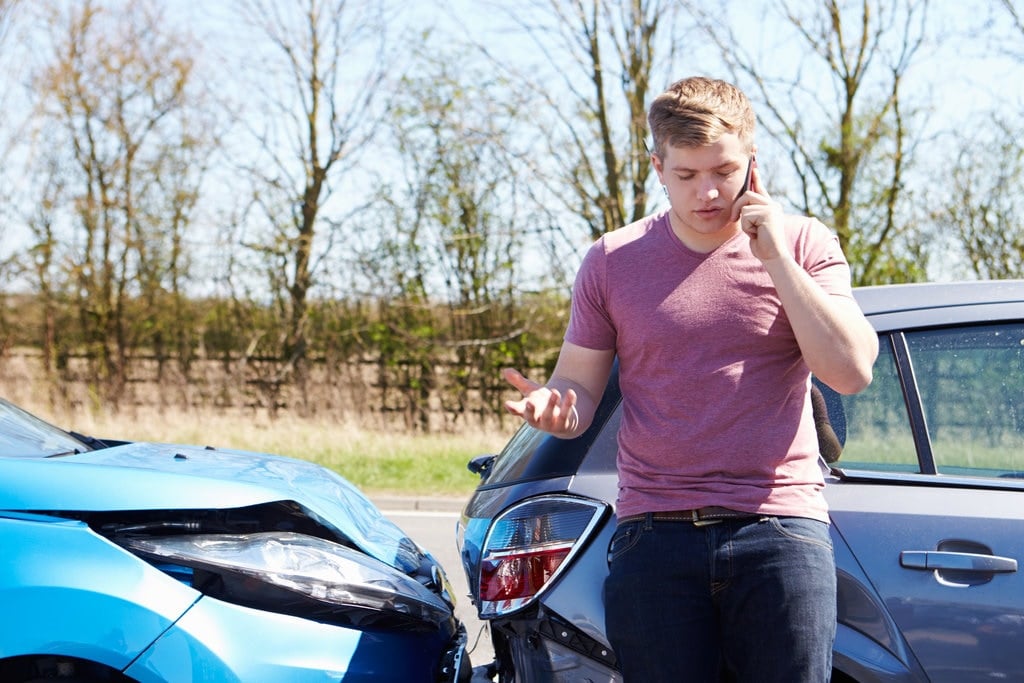
The day your teen drives away with a license in their pocket is one of the proudest, and most nerve-wracking, days of parenthood. Their freedom is real, and so is the risk. According to data from the Centers for Disease Control and Prevention and the Insurance Institute for Highway Safety, drivers aged 16 to 19 have the highest crash rates of any age group on the road. Per mile driven, teen drivers are nearly three times more likely than drivers over 20 to be in a fatal crash. About 2,800 teens ages 13 to 19 died in U.S. motor vehicle crashes in a recent year, and roughly 280,000 more were treated in emergency departments for crash-related injuries.
In Pennsylvania, teen crashes are concentrated in a few familiar patterns and most of them are preventable. This guide highlights the eight leading causes of teen car accidents, the Pennsylvania laws specifically designed to reduce them, and what parents and teen drivers need to know to stay safer behind the wheel.
Why Teen Drivers Crash More Often Than Anyone Else
Three things drive the elevated teen crash rate, and they compound each other:
- Inexperience: Driving is a complex skill built through repeated exposure to varied conditions. New drivers have not yet developed automatic responses that experienced drivers rely on, and the early months of solo driving are statistically the most dangerous.
- Brain development: The prefrontal cortex, the region of the brain responsible for impulse control, risk assessment, and decision-making under pressure, does not finish developing until the mid-20s. Teen drivers underestimate risk, overestimate their abilities, and respond more slowly to unexpected events.
- Peer dynamics: Adding even one teen passenger doubles the crash risk for a 16- or 17-year-old driver. Adding multiple passengers can quadruple it. This is the foundation for Pennsylvania’s strict passenger restrictions on junior license holders.
These risks do not mean teen crashes are inevitable. They do mean that experience, supervision, and the right rules make a measurable difference.
The 8 Leading Causes of Teen Car Accidents
- Distracted Driving
Distraction is the leading killer of teen drivers. The CDC reports that approximately 39% of high school students who drive admitted to texting or emailing while behind the wheel within the past 30 days. Distracted driving takes three forms – 1.) visual (eyes off the road), 2.) manual (hands off the wheel), and 3.) cognitive (mind off driving) … and texting hits all three at once. A driver traveling 55 miles per hour who looks down at a phone for five seconds covers the length of a football field essentially blind. Since 2012, Pennsylvania has banned texting while driving for all drivers under 75 Pa. C.S. § 3316, but enforcement reaches only a fraction of the conduct. Beyond phones, distractions include passengers, food, music, GPS, and social media.
- Speeding
Speed is involved in approximately 30% of fatal teen crashes, which is a higher rate than for any other age group. Inexperienced drivers underestimate stopping distance, misread road conditions, and overestimate how quickly they can react to a hazard. Speed compounds every other risk factor: distracted driving at high speed is more dangerous, drowsy driving at high speed is more dangerous, and driving with peers in the car at high speed is significantly more dangerous. Lancaster, York, and Chester County’s mix of rural roads, township-level speed limit changes, and highway stretches like Route 30 and I-83 create frequent opportunities for teens to misjudge safe speed.
- Inexperience
There is no substitute for practiced driving hours. Pennsylvania’s graduated licensing law requires a minimum of 65 hours of supervised driving before a teen can take the road test for a junior license, including 10 hours of nighttime driving and 5 hours of bad-weather driving. The minimum is just that -a minimum. The American Automobile Association recommends parents provide significantly more supervised practice, especially in conditions teens find challenging: rain, snow, highway merges, downtown driving, and unfamiliar roads. Parents who treat 65 hours as a target rather than a floor leave their teens underprepared for the real conditions of solo driving.
- Driving with Other Teens in the Car
This is the single most addressable cause of teen crashes. Research summarized by the Insurance Institute for Highway Safety shows the fatal crash risk for a 16- or 17-year-old driver doubles with one teen passenger and quadruples with three or more. Pennsylvania law directly addresses this through junior license passenger restrictions—commonly known as “Lacey’s Law,” named in memory of a teen killed in a crash the law was intended to prevent.
Under 75 Pa. C.S. § 1503, junior license holders may not drive with more than one passenger under 18 (other than family members) for the first six months. After six months crash-free and violation-free, the limit increases to three. If the junior driver has been in a reportable crash for which they were partially or fully responsible, the one-passenger limit applies for the entire junior license period, typically until the teen turns 18.
- Drowsy Driving
Teens are chronically sleep-deprived. Most need 8 to 10 hours of sleep per night and routinely get far less. Drowsy driving is the second leading cause of fatal teen crashes after distracted driving, and the impairment is comparable to driving drunk. A driver who has been awake for 18 hours has reaction times equivalent to a blood alcohol level of 0.05%, enough to severely impair judgment. To reduce risk, Pennsylvania’s curfew rule for junior license holders restricts junior drivers from being on the road between 11 p.m. and 5 a.m. unless they are with a parent or guardian or traveling for approved activities like work or volunteer service.
- Failure to Wear a Seat Belt
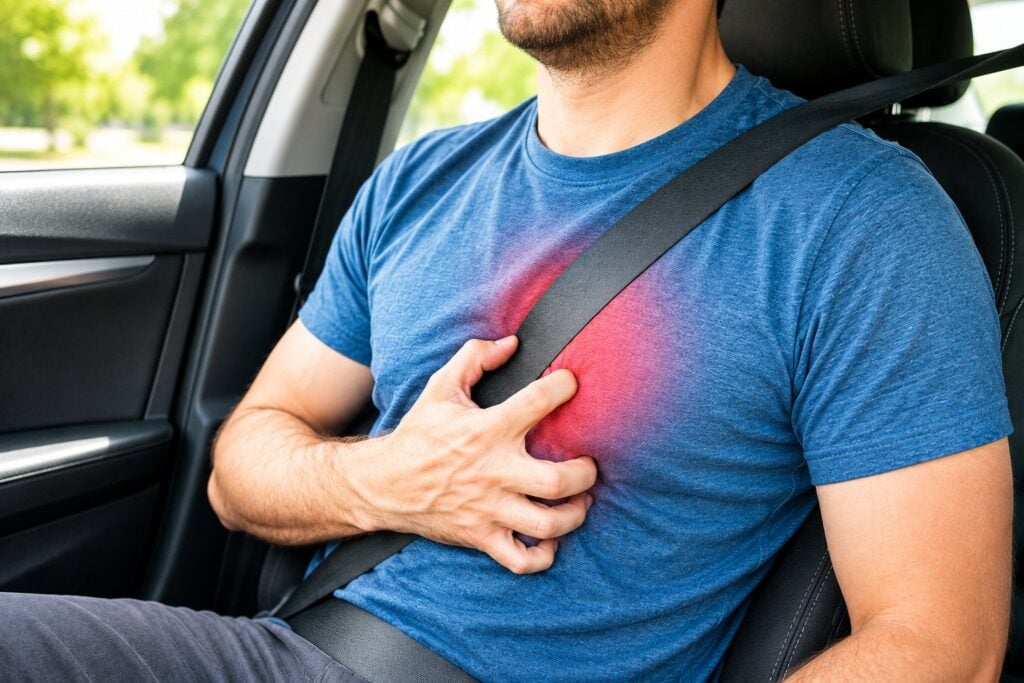
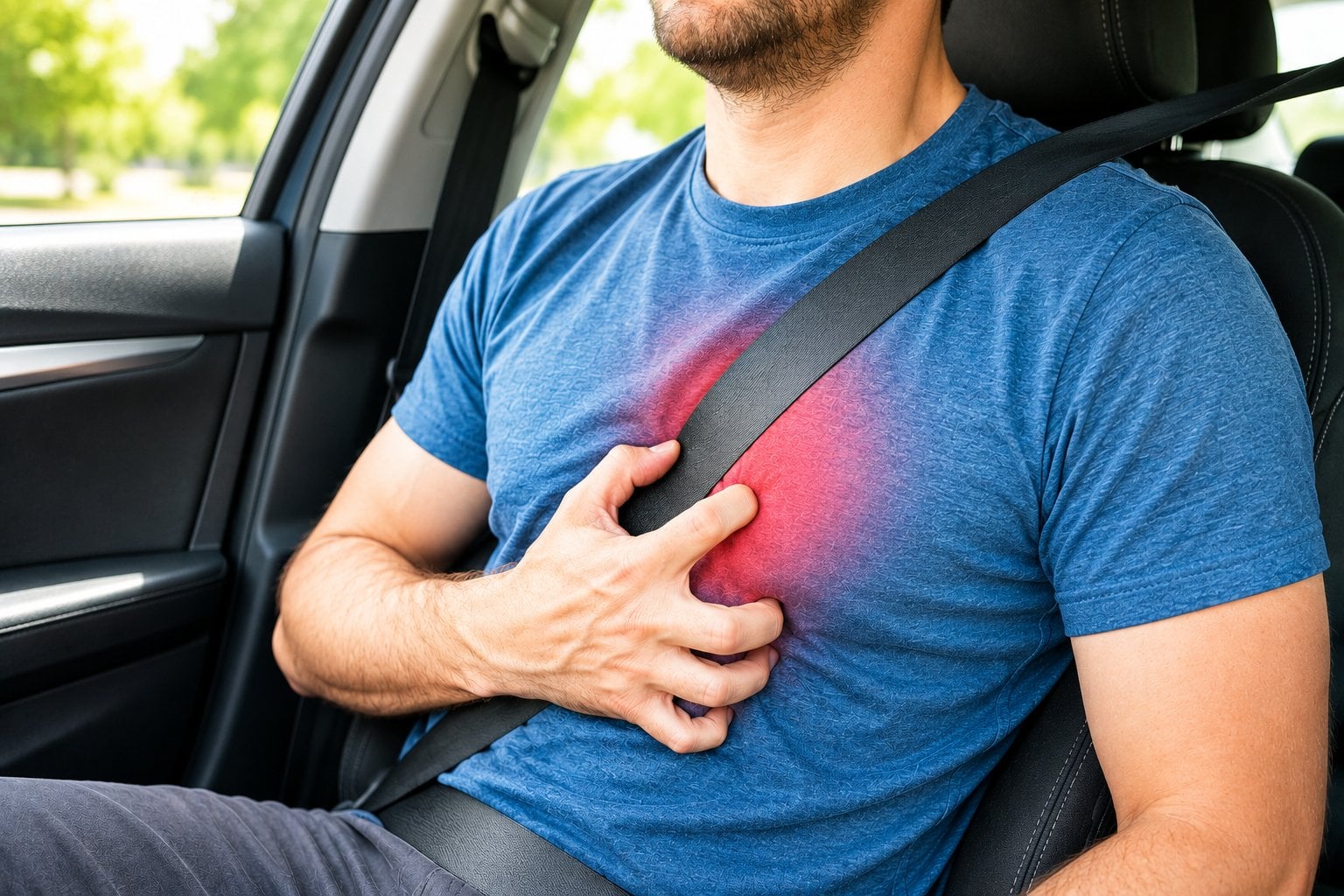
Teens have the lowest seat belt use of any age group on the road. About 43% of high school students who drive report not always wearing a seat belt, and unbuckled passengers in teen-driven cars die at significantly higher rates than belted ones. In Pennsylvania, drivers and front-seat passengers are required to wear seat belts under 75 Pa. C.S. § 4581, and all passengers under 18 must be belted regardless of seating position. Many teen crash fatalities are not caused by the crash itself; they are caused by ejection or impact severity that a seat belt would have prevented.
- Alcohol and Drug Impairment
Pennsylvania has a zero-tolerance law for drivers under 21. Any blood alcohol concentration of 0.02% or higher, effectively any drink at all, is grounds for DUI charges, license suspension, and criminal penalties under 75 Pa. C.S. § 3802(e). The legal threshold for adult drivers is 0.08%. Despite this, alcohol is involved in approximately 17% of all fatal teen crashes nationally. Marijuana and prescription drug impairment is a growing concern as well; THC remains detectable in the body long after impairment fades, and combined alcohol-and-drug impairment significantly increases crash risk over either alone.
- Reckless and Aggressive Driving
Tailgating, weaving, illegal passing, running stop signs and red lights, racing, and “show-off” maneuvers, particularly with peers in the car, contribute to a meaningful share of teen crashes. Pennsylvania’s reckless driving statute, 75 Pa. C.S. § 3736, criminalizes driving “in willful or wanton disregard for the safety of persons or property,” and consequences for teen drivers include points on the license, license suspension at 6 points, and 90-day suspension for any single high-speed violation (defined as 26 mph or more over the posted limit).
How Pennsylvania’s Graduated Driver Licensing Law Reduces Teen Crashes
Pennsylvania’s GDL law, effective since 1999 and significantly strengthened in 2011 (Lacey’s Law), is a three-stage system designed to phase in driving privileges as experience builds. Each stage carries specific restrictions tied to the most common teen crash risks.
Stage 1: Learner’s Permit (Age 16 minimum)
- Issued after passing a knowledge test, vision exam, and physical exam
- Valid for one year
- Must be supervised at all times by a licensed driver age 21+ (or a licensed parent or spouse age 18+)
- Number of passengers limited to the number of available seat belts; all under 18 must be belted
- 90-day permit suspension at 6 points or for any high-speed violation
Stage 2: Junior Driver’s License (Earliest Age 16.5)
- Requires 6 months on the learner’s permit and 65 hours of supervised driving (10 hours nighttime, 5 hours bad weather)
- Curfew: no driving 11 p.m. to 5 a.m. except for documented work, charity, or volunteer fire service
- First 6 months: no more than 1 non-family passenger under 18 unless a parent or guardian is in the car
- After 6 months crash- and violation-free: up to 3 non-family passengers under 18
- Reportable crash or any moving violation: 1-passenger limit reinstated for the rest of the junior license period
- 90-day suspension for accumulating 6 points or for any high-speed violation
Stage 3: Unrestricted License (Age 18, or 17.5 with Conditions)
- All restrictions lifted at age 18, or earlier (as young as 17.5), for teens who completed an approved driver education program, held a junior license for 12 months, and remained crash- and violation-free
These restrictions are not bureaucratic formalities. They are evidence-based responses to specific, well-documented teen crash risks. Pennsylvania’s GDL has reduced 16- and 17-year-old crashes and fatalities significantly since it took effect.
What Parents Can Do to Reduce Teen Driving Risk
Beyond following the GDL law, parents have powerful tools available:
- Set rules stricter than the law: PennDOT itself recommends parents go further than the GDL minimums – enforce a no-phone rule, an earlier curfew, and a passenger limit that holds even after the 6-month mark.
- Ride with your teen regularly: Periodic supervised drives, even after the junior license is issued, give parents a real picture of their teens’ decision-making behind the wheel.
- Use a parent-teen driving agreement: Written agreements covering expectations, consequences, and privileges (a CDC-promoted tool) consistently reduce risky behavior.
- Model the behavior you expect: Teens whose parents text behind the wheel, speed, or skip seat belts are significantly more likely to do the same.
- Choose the vehicle carefully: Heavier, slower, well-equipped vehicles with modern crash-avoidance features (automatic emergency braking, blind-spot warning, lane-departure warning) protect teen drivers in ways smaller, older, faster cars do not.
- Watch for signs of impaired driving- by phone, fatigue, or substance: Have direct conversations early, and revisit them often.
If a Pennsylvania Teen Is in a Car Accident: Legal Considerations
Liability and Pennsylvania’s Family Car Doctrine
When a teen driver causes a crash, multiple parties may face liability. The teen driver is responsible for their own conduct, but Pennsylvania’s modified comparative negligence rule under 42 Pa. C.S. § 7102 governs how fault is apportioned among all involved drivers. If the teen is partially at fault, recovery is reduced by their percentage of fault and barred entirely if they are more than 50% at fault. Insurers aggressively probe for ways to assign blame to teen drivers.
In Pennsylvania, parents of minor drivers are typically not automatically liable for the negligent acts of their children behind the wheel. However, parents who knowingly permit unsupervised driving in violation of the GDL, who allow a teen with a known substance abuse problem to drive, or who entrust a vehicle to a teen with known reckless tendencies may face liability under the doctrine of negligent entrustment.
Insurance Considerations
Pennsylvania requires a minimum liability insurance policy of $15,000 per person, $30,000 per accident, and $5,000 in property damage under 75 Pa. C.S. § 1786. These minimums are inadequate for serious injuries. Most family auto policies provide significantly higher limits, and adding a teen driver to a parent’s policy is generally less expensive than purchasing a separate policy. Pennsylvania requires a minimum of $5,000 in Personal Injury Protection (PIP) coverage, which pays for medical expenses regardless of fault.
Limited Tort and Teens
If the family carries limited tort under 75 Pa. C.S. § 1705, a teen driver injured in a crash may face limits on pain-and-suffering recovery unless the injury qualifies as “serious.” Pennsylvania’s definition of serious injury includes death, serious impairment of body function, or permanent serious disfigurement. Limited tort exceptions, including crashes caused by uninsured drivers, commercial vehicle drivers, DUI drivers, and out-of-state drivers, still apply for teen victims. These determinations are case-specific and benefit from experienced legal review.
Statute of Limitations
Pennsylvania’s two-year personal injury statute of limitations under 42 Pa. C.S. § 5524 applies to teen crash claims. For minors, the two-year clock does not begin running until the 18th birthday, giving them until age 20 to file. Despite this extended window, evidence preservation matters; surveillance footage, witness memories, and vehicle damage all begin disappearing immediately after a crash.
When Teen Crashes Are Fatal
When a teen crash claims a life, whether it be the teen driver, a teen passenger, an occupant of another vehicle, or a pedestrian, surviving family members may pursue a wrongful death claim under Pennsylvania’s Wrongful Death Act (42 Pa. C.S. § 8301) and a separate Survival Act claim. Recoverable damages include funeral expenses, lost financial support, loss of companionship, and the deceased’s pain and suffering before death. These are some of the most legally complex and emotionally difficult cases in personal injury law, and they require attorneys who handle them regularly.
Frequently Asked Questions
Not automatically. Pennsylvania does not impose vicarious liability on parents for every act of their licensed teen driver. However, parents may be liable under the doctrine of negligent entrustment if they knowingly permitted unsupervised driving in violation of the GDL, allowed a teen with known substance abuse or reckless behavior to drive, or otherwise entrusted a vehicle to someone they knew to be unfit. Insurance from the parents’ policy typically covers the teen’s driving regardless.
Lacey’s Law (Act 81 of 2011, named for Lacey Gallagher, a teen killed in a multi-passenger teen-driver crash) updated 75 Pa. C.S. § 1503 to limit junior license holders to one non-family passenger under 18 for the first six months of the junior license. After six months crash- and violation-free, the limit increases to three. If the junior driver has a reportable crash or any moving violation, the one-passenger limit applies for the rest of the junior license period.
Yes. A junior license is suspended for 90 days if the driver accumulates 6 or more points or is convicted of a single high-speed violation (driving 26 mph or more over the posted speed limit). Subsequent violations result in 120-day suspensions. DUI under Pennsylvania’s zero-tolerance law (BAC of 0.02% or higher for drivers under 21) carries license suspension and criminal penalties under 75 Pa. C.S. § 3802(e).
Two years from the date of the crash under 42 Pa. C.S. § 5524. but the clock does not start running until your child turns 18. A teen injured at age 16 has until age 20 to file. Despite the extended window, do not wait. Surveillance footage gets overwritten, witnesses move on, and the sooner an attorney is involved, the more effectively the case can be preserved and proven.
Yes. Since the 1999 enactment and 2011 update, Pennsylvania has seen significant reductions in 16- and 17-year-old crash and fatality rates. National research consistently confirms that GDL programs, particularly those with strong nighttime curfews and passenger restrictions, reduce teen crashes by 20–40% depending on the specific provisions and enforcement.
Nothing up front. We handle every car accident case on a contingency fee basis- you pay no legal fees unless we recover compensation for you. The initial consultation is always free. We can meet at our office, your home, a hospital, or a rehab facility throughout Lancaster, York, and Chester County.