

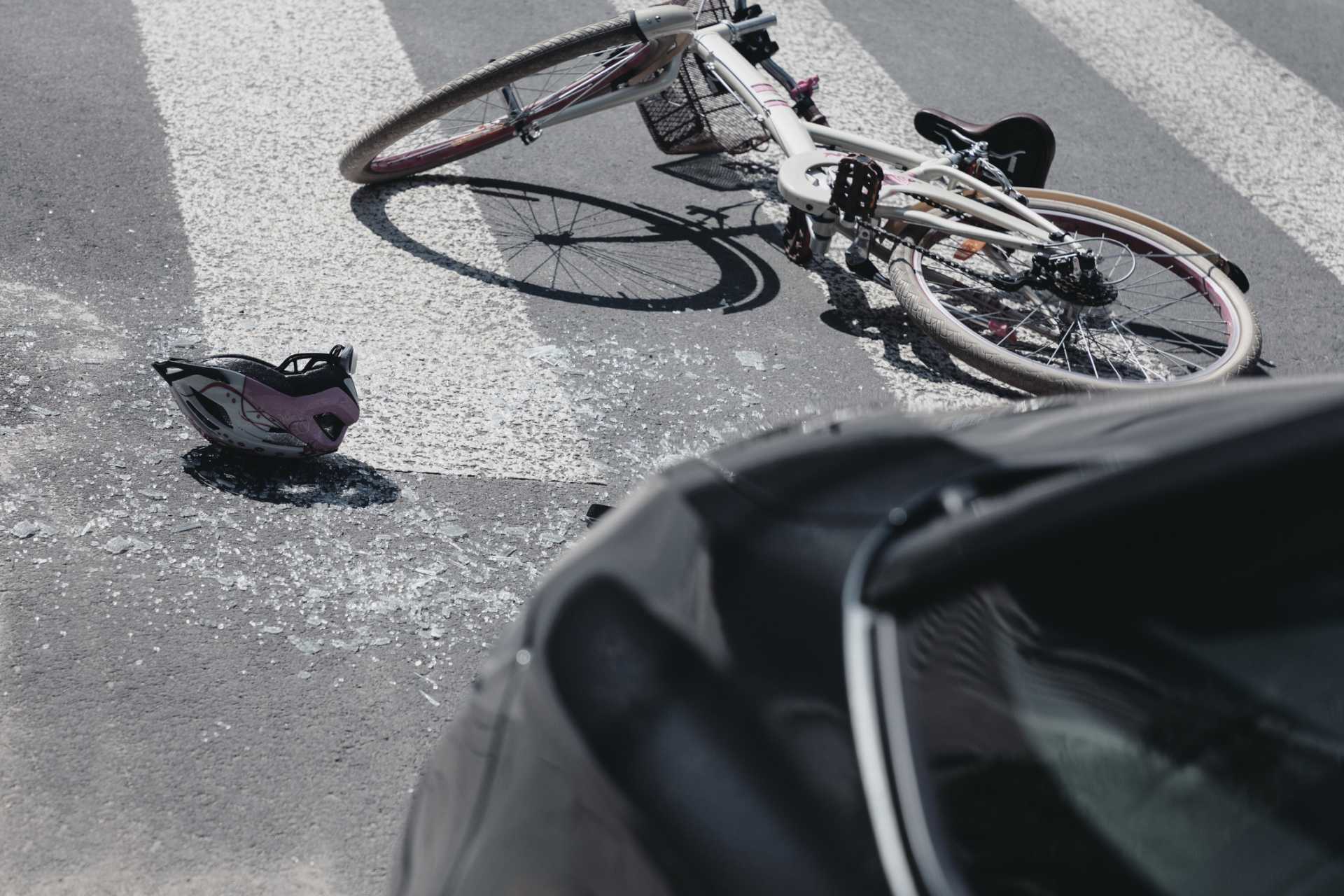
Cycling in Lancaster, York, and Chester County means sharing roads with drivers who don’t always know the rules, or don’t follow them when they do. A bicycle crash with a motor vehicle is rarely a fair fight. Riders absorb the full force of the collision with nothing between them and the pavement but whatever gear they happen to be wearing. The injuries are often serious. The legal questions that follow – who was at fault, what insurance applies, what compensation is available – are more complicated than most people expect. This article covers Pennsylvania bicycle law from the ground up, explains the most common crash scenarios and how liability is determined, and tells you exactly what to do if a driver injures you on the road.
The Numbers: Bicycle Accidents in Pennsylvania
Bicycle crashes in Pennsylvania are more common and more serious than most drivers think. According to recent PennDOT data, bicycle crashes make up over 1% of all traffic accidents in Pennsylvania, with cyclist fatalities accounting for nearly 2% of all traffic deaths in the state – a disproportionate share that reflects how vulnerable riders are in any collision with a motor vehicle.
Most collisions, 64%, occur at intersections, according to PennDOT, pointing directly at drivers who ignore right-of-way rules, fail to yield when turning, or simply don’t look for cyclists when they should. Over 60% of bicyclist fatalities and nearly half of all cyclist injuries happen on non-interstate roads, meaning familiar local routes are as dangerous as any highway.
| 64% | of PA bicycle crashes happen at intersections — most caused by drivers failing to yield. |
| ~2% | of all PA traffic fatalities are cyclists, despite bicycles making up only 1% of accidents. |
These numbers have been trending upward since 2022. The roads in Central Pennsylvania are not getting safer for cyclists on their own.
Pennsylvania Bicycle Law: What Every Cyclist and Driver Needs to Know
Pennsylvania’s Vehicle Code classifies bicycles as vehicles under 75 Pa. C.S. § 3501. That classification is the foundation of everything that follows – cyclists have the same legal rights on the road as any motor vehicle driver, and drivers owe cyclists the same duties they owe any other vehicle. Violating those duties creates liability.
The Four-Foot Passing Law
One of the most important, and most frequently violated, rules in Pennsylvania is the four-foot passing requirement. Under Pennsylvania law, a motor vehicle passing a bicycle must allow at least four feet of clearance and pass at a careful and prudent speed. Critically, it is the motorist’s responsibility to provide this clearance, not the cyclist’s responsibility to move over. Drivers may pass a cyclist even in a no-passing zone if they can do so with due care and the required four-foot clearance. What they may not do is squeeze past a cyclist in the same lane, regardless of how wide the road appears.
Where Cyclists Can Ride
Cyclists may ride on the shoulder of any road or in the right half of the roadway. On a multi-lane road, a cyclist may use the rightmost travel lane. On a two-lane road, the right lane. On a road without a center line, anywhere on the right side. Cyclists are permitted to leave the rightmost position when passing another vehicle, preparing for a left turn, or avoiding a hazard that requires a lane change. Bicycles are not permitted on freeways or divided highways without PennDOT permission.
Traffic Laws Apply Equally
Cyclists must obey all traffic signals, stop signs, and right-of-way rules. Signals include following turn signal requirements – extending the left arm horizontally for a left turn, extending the right arm horizontally or the left arm upward for a right turn, and extending the left arm downward to signal a stop. Riding against traffic is prohibited under all circumstances. Two cyclists may ride side-by-side, but no more, on most roadways.
Sidewalk Riding
Pennsylvania permits cyclists to ride on sidewalks, with a critical exception: riding on a sidewalk is prohibited in business districts. Where sidewalk riding is permitted, cyclists must yield to pedestrians and give an audible signal before passing. Drivers are not required to yield to cyclists who cross at crosswalks as vehicles. PennDOT advises cyclists to walk their bikes across crosswalks for this reason.
Helmet Law
Pennsylvania law requires cyclists under age 12 to wear an approved bicycle helmet. Adults are not required by state law to wear a helmet – but they should. PennDOT data indicates that a properly fitted helmet reduces the risk of serious injury in a crash by up to 85%. Crucially, a cyclist’s failure to wear a helmet cannot be used as contributory negligence against them in a personal injury claim. An insurance company that tries to reduce your recovery because you weren’t wearing a helmet is taking a position that Pennsylvania law does not support.
Lighting Requirements
Any cyclist riding between sunset and sunrise must have a white front lamp visible from at least 500 feet, a red rear reflector or red rear light visible from at least 500 feet, and amber reflectors on both sides. These are legal requirements, not just safety suggestions – and a rider without required lighting may face partial fault arguments in a nighttime crash.
The Most Common Bicycle Crash Scenarios — and Who Is Liable
The Right-Hook Crash
A driver passes a cyclist and then immediately turns right, cutting across the cyclist’s path. The cyclist, who has the right of way traveling straight, is struck. This is one of the most common, and most preventable, bicycle crashes. The driver is almost always at fault for failing to complete the pass before initiating the turn.
Dooring
A driver or passenger opens a car door directly into a cyclist’s path. Pennsylvania law prohibits opening any vehicle door unless it is reasonably safe to do so and does not interfere with traffic. A person who doors a cyclist is liable for the resulting injuries. Cyclists riding alongside parked cars should maintain approximately four feet of clearance from parked vehicles, but a driver who opens a door without checking is the responsible party.
Intersection Right-of-Way Violations
Drivers who fail to yield at intersections, run red lights, or don’t look for cyclists before turning left across oncoming traffic cause the majority of serious bicycle crashes. These crashes are often fatal. A driver who strikes a cyclist in violation of right-of-way rules is liable for all resulting damages.
Rear-End Collisions
A distracted or speeding driver strikes a cyclist from behind, often on a rural road or in low-visibility conditions. These crashes typically leave little ambiguity about fault – the driver following too closely or failing to maintain awareness of the roadway ahead is at fault.
Road Defect Crashes
Not every bicycle crash involves another vehicle. Potholes, cracked pavement, raised drain covers, and debris on the road can throw a cyclist without any car involved. In these cases, liability may fall on the municipality responsible for road maintenance – but Pennsylvania’s Political Subdivision Tort Claims Act imposes short notice deadlines on municipal claims. It only allows six months to file a written notice. If a road defect caused your crash, contact an attorney quickly.
A Critical Advantage for Cyclists: Full Tort Coverage
Most Pennsylvania drivers choose between limited tort and full tort coverage when they purchase auto insurance. Under limited tort, a driver who is injured in an accident cannot recover for pain and suffering unless their injuries meet a serious injury threshold. This restriction was designed for car accident claims. It does not apply to cyclists.
As a cyclist injured by a motor vehicle, you are entitled to full tort recovery – including pain and suffering and regardless of what tort option the at-fault driver selected on their own policy. Insurance adjusters frequently fail to disclose this. They may offer a settlement that reflects limited tort thinking, when in fact the law entitles you to much more. This is one of the most significant advantages cyclists have in Pennsylvania personal injury claims, and one of the most common ways unrepresented cyclists leave money on the table.
What Compensation Can You Recover After a Bicycle Accident?
If a driver’s negligence caused your bicycle crash, you may be entitled to recover:
Economic Damages
- Medical expenses – emergency care, hospitalization, surgery, physical therapy, and ongoing treatment
- Lost wages – income lost during recovery
- Lost earning capacity – if injuries affect your ability to work long-term
- Bicycle repair or replacement
- Out-of-pocket expenses related to the crash
Non-Economic Damages
- Pain and suffering
- Emotional distress – anxiety, PTSD, and fear of cycling are real and compensable
- Loss of enjoyment of life – particularly significant when cycling was a meaningful part of your daily routine
- Loss of consortium
Pennsylvania does not cap non-economic damages in standard personal injury cases. Where a cyclist is killed by a negligent driver, surviving family members may pursue a wrongful death claim under the PA Wrongful Death Act (42 Pa. C.S. § 8301), recovering for funeral expenses, lost financial support, and the loss of companionship.
Pennsylvania’s modified comparative negligence rule under 42 Pa. C.S. § 7102 applies: if a cyclist is found partially at fault – perhaps for not signaling a turn or riding against traffic – their recovery is reduced by their percentage of fault, as long as that percentage does not exceed 50%. Insurance companies will probe for any cyclist’s behavior that can be reframed as contributing to the crash. An experienced attorney knows how to counter this.
The statute of limitations for personal injury claims in Pennsylvania is two years under 42 Pa. C.S. § 5524. As previously mentioned, for municipal road defect claims, the notice deadline may be as short as six months.
What to Do After a Bicycle Accident in Pennsylvania
- Call 911: make sure a police report is filed even if the driver insists the crash is minor. The report documents the scene and the parties involved.
- Stay at the scene: gather the driver’s name, insurance information, license plate, and contact information for any witnesses.
- Photograph everything: your bike, your injuries, the vehicle, road markings, the point of impact, and any relevant road conditions or signage.
- Seek medical attention immediately: adrenaline masks pain. Internal injuries, concussions, and soft tissue damage may not be obvious at the scene but can be serious.
- Do not give a recorded statement to the driver’s insurance company before speaking with an attorney: adjusters are trained to find language that reduces your claim.
- Contact a personal injury attorney as soon as possible: evidence disappears, witnesses forget, and surveillance footage is overwritten quickly.
How GLS Injury Law Handles Bicycle Accident Cases
At GLS Injury Law, we represent cyclists injured by negligent drivers throughout Lancaster, York, and Chester Counties. We know what it looks like when an insurance company tries to limit a cyclist’s recovery by misrepresenting the tort rules, assigning comparative fault for minor cycling behaviors, or making a fast settlement offer before the full extent of injuries is known.
Bicycle accident cases require prompt investigation – the four-foot passing law violation that caused your crash needs to be established through witness accounts, dashcam or traffic camera footage, the police report, and physical evidence at the scene. We move quickly on the evidence that disappears first.
We handle every bicycle accident case on a contingency fee basis. You pay nothing unless we recover compensation for you. If you cannot come to us, we will come to you.
References:
- PennDOT Bicycle Safety & PA Laws: https://www.pa.gov/agencies/penndot/traveling-in-pa/riding-a-bike/bicycle-safety-and-pennsylvania-laws
- PennDOT Crash Statistics: https://crashinfo.penndot.pa.gov/PCIT/welcome.html
- 75 Pa. C.S. § 3501 et seq. (PA Vehicle Code — Pedalcycles): https://www.legis.state.pa.us/cfdocs/legis/LI/consCheck.cfm?txtType=HTM&ttl=75&div=0&chpt=35
Frequently Asked Questions
Yes – and this is one of the most important things cyclists need to know. Pennsylvania’s limited tort restriction that applies to car accident claims does not apply to cyclists. As a bicyclist injured by a motor vehicle, you are entitled to full tort recovery including pain and suffering, regardless of what insurance option you or the driver selected. Insurance companies often do not volunteer this information.
No. Pennsylvania law explicitly prohibits using a cyclist’s failure to wear a helmet as evidence of contributory negligence. An insurer that attempts to reduce your recovery on that basis is taking a legally unsupported position. Adult cyclists are not required by law to wear a helmet, and the choice not to wear one cannot be held against you in a claim.
Not necessarily. Pennsylvania law gives cyclists the right to leave the rightmost position to avoid hazards, prepare for turns, or when road conditions make staying right impractical. Drivers are required to maintain four feet of clearance regardless of where in the lane a cyclist is positioned. Insurance companies frequently raise lane position arguments to assign comparative fault – an experienced attorney can challenge this effectively.
You may have a claim against the municipality responsible for maintaining that road. However, Pennsylvania’s Political Subdivision Tort Claims Act imposes short notice requirements – in some cases as little as six months from the date of injury. If a road defect contributed to your crash, contact an attorney immediately to preserve your right to make a claim.
Two years from the date of the accident, under 42 Pa. C.S. § 5524. For claims against municipalities for road defects, the notice deadline may be much shorter – sometimes six months. Do not wait. Evidence disappears, witnesses become harder to locate, and the sooner an attorney is involved, the stronger your case.
Pennsylvania law requires drivers to allow at least four feet of clearance when passing a cyclist, and to do so at a careful and prudent speed. It is the driver’s responsibility to provide this clearance. A driver who violates the four-foot rule and strikes or forces off a cyclist has breached a specific statutory duty – which makes establishing negligence in a personal injury claim significantly more straightforward.