

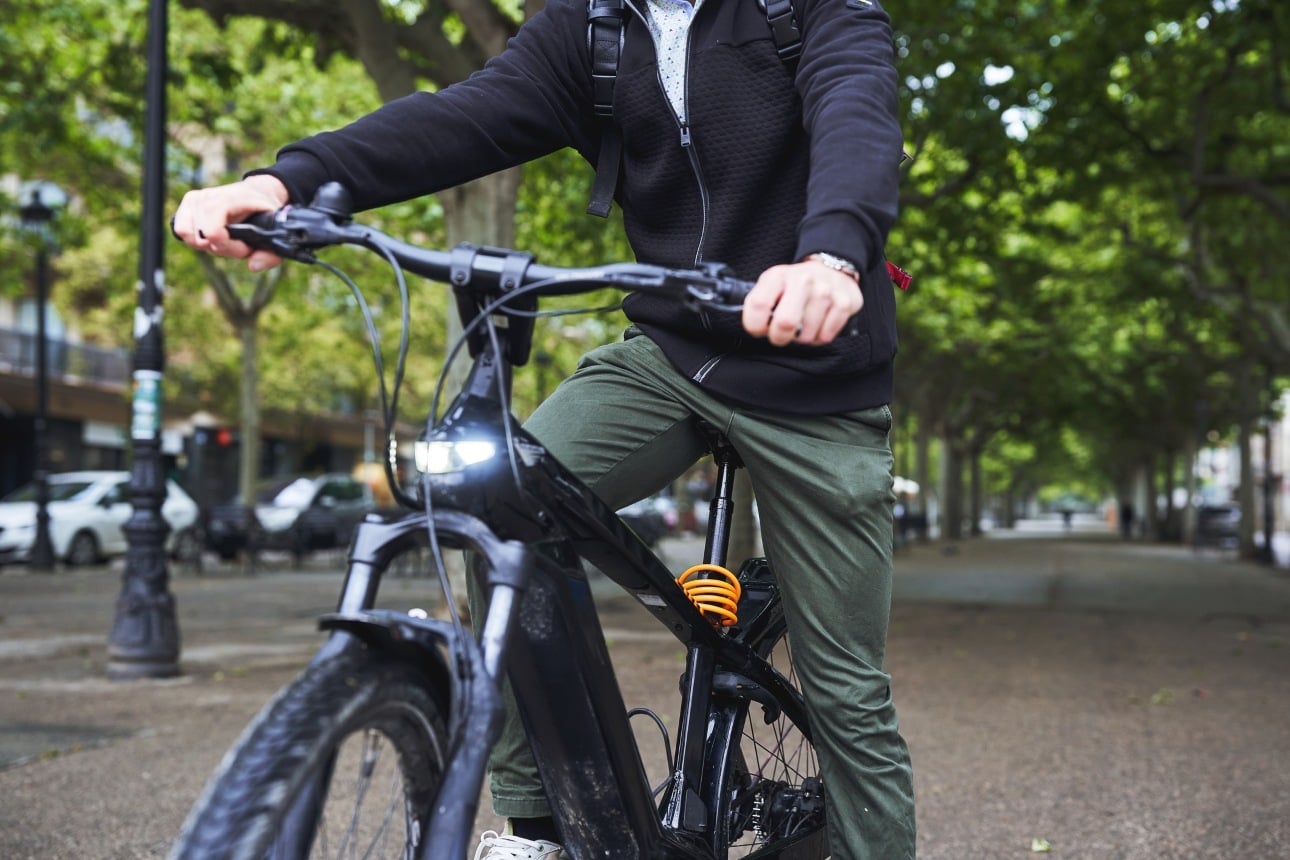
When the holiday catalogs arrive and your child circles a glossy photo of an electric bike, it is easy to picture a slightly faster, slightly easier version of the bicycle you rode as a kid. The reality on the road today is very different. Some products being marketed online as “e-bikes” are capable of reaching 30, 40, even 50 miles per hour. They weigh well over 100 pounds. They look like bicycles. They are not.
At GLS Injury Law, attorneys are seeing the consequences firsthand: children with traumatic brain injuries, broken bones, internal trauma, and, in the most heartbreaking cases, fatalities from crashes involving high-speed electric bikes. The vehicles, the speeds, and the injury patterns increasingly resemble motorcycle crashes, not bicycle crashes. The protective gear riders are wearing rarely matches the actual risk.
| “We’re getting calls involving devastating injuries involving children — head trauma, broken bones, permanent injuries, and in some cases fatalities. The problem is many parents believe they purchased an e-bike, when in reality, some of these machines function much closer to motorcycles or dirt bikes.”
— Christopher P. Larsen, Partner, GLS Injury Law |
This guide explains how Pennsylvania law actually defines an e-bike, the moment a product stops being legally classified as one, the specific risks high-speed electric bikes pose to children, and the legal exposure parents may face when minors operate them irresponsibly or unlawfully.
Quick Answer: Are High-Speed E-Bikes Legal for Kids in Pennsylvania?
|
The Numbers: Why Pediatric E-Bike Injuries Are a Public Health Concern
Data from federal regulators and pediatric trauma programs confirm what GLS attorneys are seeing on intake calls:
- The U.S. Consumer Product Safety Commission (CPSC) reported a nearly 21% year-over-year increase in e-scooter and e-bike injuries in its most recent data release.
- Children ages 14 and younger account for approximately 36% of micromobility injuries, according to the CPSC’s 2017–2023 “Micromobility Products-Related Deaths, Injuries, and Hazard Patterns” report.
- Penn State Health pediatric trauma teams have publicly noted a sharp rise in emergency department visits involving electric bikes and scooters, particularly among adolescents.
- The American College of Surgeons has issued a formal statement on electric bicycle safety, warning that the injury severity and pattern in pediatric e-bike crashes is qualitatively different from traditional bicycle injuries.
These are not abstract trends. They reflect emergency room admissions, surgical interventions, ICU stays, and, in some cases, decisions about life support. The injury severity is being driven by speed, mass, and the use of inadequate protective equipment for the actual capabilities of the machines.
Not All “E-Bikes” Are Actually E-Bikes
The single biggest source of confusion for parents is the assumption that everything sold online as an “electric bike” falls under the same legal and safety classification. It does not. Federal guidelines, industry conventions, and, critically, Pennsylvania state law each draw the line in slightly different places, and many products marketed to teenagers fall outside those lines entirely.
The Federal Definition
Under federal consumer product guidelines codified at 15 U.S.C. § 2085 and trail-use rules at 23 U.S.C. § 217, a “low-speed electric bicycle” generally must:
- Have fully operable pedals
- Use a motor rated at 750 watts or less
- Have a maximum motor-powered speed of 20 mph on level ground
The Industry “Three-Class” System
Many states, manufacturers, and retailers have adopted a three-class system that has become the default vocabulary of the industry:
- Class 1: Pedal-assist only, motor assistance up to 20 mph
- Class 2: Throttle-equipped, maximum motor-assisted speed of 20 mph
- Class 3: Pedal-assist only, motor assistance up to 28 mph (typically restricted to riders 16 and older)
Pennsylvania Has Its Own Definition…and It Is Stricter
This is where most parents and even many retailers get it wrong: Pennsylvania does not use the three-class system. Pennsylvania has a single statutory definition, and it is narrower than the industry standard. Under 75 Pa. C.S. § 102, a “pedalcycle with electric assist” is defined as a vehicle that meets all of the following:
- Weighs not more than 100 pounds
- Has two or three wheels more than 11 inches in diameter
- Is equipped with an electric motor system rated at not more than 750 watts
- Has operable pedals
- Is capable of a speed not more than 20 miles per hour on a level surface when powered by the motor source only
Notice what is missing: the 28-mph Class 3 category does not exist in Pennsylvania law. A bike marketed as a “Class 3 e-bike” in another state is not automatically a legal “pedalcycle with electric assist” in Pennsylvania. If it exceeds 20 mph on motor power alone, it falls outside the statutory definition.
What Happens When an “E-Bike” Stops Being a Legal Bicycle in Pennsylvania
The legal consequence of exceeding Pennsylvania’s e-bike threshold is significant. Once a machine exceeds Pennsylvania’s e-bike definition, it may no longer qualify as a lawful ‘pedalcycle with electric assist’ under state law and could instead be treated as a motor-driven cycle, moped, or other motor vehicle subject to substantially different legal requirements.
Depending on how the vehicle is classified it could require:
- Registration and a title through PennDOT
- Liability insurance
- A Class M driver’s license (or Class C with restrictions for limited-displacement vehicles)
- Compliance with motorcycle-style equipment requirements
Riding a high-speed electric bike that falls outside the e-bike definition without these credentials is not a technicality. It may constitute operation of an unregistered or uninsured motor vehicle without the legally required licensing or credentials
At impact speeds of 30 or 40 miles per hour, the resulting injuries also bear far more resemblance to a motorcycle accident than a bicycle accident. The forces involved, the protective gear deficit, and the severity of typical injuries reflect a different category of crash altogether.
Common Injuries in Pediatric Electric Bike Crashes
Hospitals across Pennsylvania are documenting a consistent pattern of injuries from high-speed e-bike crashes involving children and teens. The most common include traumatic brain injuries ranging from concussions to severe TBI, often where helmet use was inadequate for the actual crash speed; facial fractures, dental injuries, and lacerations; broken bones, particularly clavicles, wrists, arms, and legs; spinal injuries; internal organ trauma; severe road rash and skin loss requiring grafting; and in the worst cases, fatal injuries from collisions with motor vehicles or stationary objects.
Many of these injuries occur in scenarios that would not have produced the same outcome at traditional bicycle speeds. A child who falls from a 15-mph pedal bike typically suffers scrapes and bruises. The same child falling from a 35-mph motorized vehicle wearing standard bicycle gear faces ICU-level trauma.
Pennsylvania Laws Governing E-Bike Operation
Beyond the definitional question, Pennsylvania law imposes specific rules on the operation of legal e-bikes. Every parent should know these:
Minimum Operating Age: 16
Under 75 Pa. C.S. § 3514, no person under the age of 16 may operate a pedalcycle with electric assist on state or local highways. A child under 16 riding an e-bike on a public road in Pennsylvania is operating it unlawfully, regardless of whether the bike itself qualifies as a legal e-bike.
Helmet Requirement Under Age 12
Pennsylvania requires helmets for any pedalcycle rider under age 12 under 75 Pa. C.S. § 3510, including children riding in trailers or child seats. The helmet must meet the standards set by the U.S. Consumer Product Safety Commission. While the legal helmet mandate stops at age 12, safety experts and Pennsylvania state agencies recommend helmets for all riders — a recommendation that becomes more urgent as motor-assisted speeds increase.
Sidewalks and Roadway Position
Pennsylvania generally allows pedalcycle operation on sidewalks except in business districts (75 Pa. C.S. § 3508), and prohibits sidewalk riding where a usable bike lane is adjacent. Local municipalities can and do impose stricter rules. E-bike riders must yield to pedestrians at all times.
Lights and Reflectors
Between sunset and sunrise, pedalcycle operators must use a front lamp visible from at least 500 feet, a rear red reflector visible from at least 500 feet, and pedal reflectors visible from at least 200 feet under 75 Pa. C.S. § 3507. These rules apply to e-bikes operated as pedalcycles with electric assist.
DUI Applies to E-Bikes
Alcohol or drug impairment while operating an e-bike can still create serious criminal and civil exposure under Pennsylvania law, particularly where the vehicle falls outside the statutory definition of a lawful pedalcycle with electric assist.
When Parents May Face Legal Liability
This is the section many parents have not fully considered, and where the consequences of a serious e-bike crash can extend well beyond the injured child.
Pennsylvania does not automatically hold parents legally responsible for every negligent act committed by their children. However, several legal theories may expose parents to liability in serious e-bike accident cases:
Negligent entrustment:
Pennsylvania recognizes negligent entrustment claims when someone provides a vehicle or dangerous instrument to a person they knew, or reasonably should have known, could not safely operate it. In certain circumstances, providing a high-speed electric vehicle to a young or inexperienced rider without proper training, supervision, or protective equipment could become a significant issue in litigation following a serious crash.
Knowingly permitting unlawful operation:
Pennsylvania law imposes different requirements depending on how an e-bike is legally classified. If a vehicle exceeds Pennsylvania’s statutory definition of a lawful “pedalcycle with electric assist,” operation without required registration, licensing, or insurance may create additional legal exposure following a collision.
Failure to supervise:
Particularly when younger children are operating powered vehicles, inadequate adult supervision may support a negligent supervision claim if another person is injured.
Civil liability exposure after a serious accident:
If a child causes a crash resulting in serious injuries, injured parties and their insurers may examine multiple potential sources of recovery depending on the circumstances — including applicable homeowner’s insurance policies, auto insurance policies, umbrella coverage, and, in some cases, personal assets.
| “When a child is operating a machine capable of motorcycle-level speeds, the legal consequences after a serious crash can become extremely significant. Parents often don’t realize these products may carry different rules, restrictions, and liability concerns than a standard bicycle.”
— Christopher P. Larsen, Partner, GLS Injury Law |
What Pennsylvania Parents Can Do Before a Crash Happens
The point of this article is not to discourage responsible e-bike use. It is to make sure parents understand what they are buying, what their child is operating, and what the law requires. Before purchasing or allowing your child to ride an electric bike:
- Verify the actual specifications: Manufacturer spec sheets list motor wattage, top speed, and weight. If any of those numbers exceed Pennsylvania’s definition (750 W, 20 mph motor-only, 100 lbs.), the bike is not a legal pedalcycle with electric assist.
- Avoid aftermarket modifications: Speed and power modifications can transform a legally compliant e-bike into an unregistered motor vehicle, with the legal and insurance consequences that come with that classification.
- Understand the age threshold: No one under 16 may operate any e-bike on Pennsylvania state or local highways.
- Match protective equipment to actual capability: A standard bicycle helmet is not designed to protect against 35-mph impacts. Higher-speed riding may warrant substantially more protective equipment than traditional bicycle riding, including full-face helmets and additional protective gear designed for higher-impact crashes.
- Supervise younger riders, even on legal e-bikes.
- Understand where e-bikes can legally operate: DCNR rules on state park and forest trails, local municipal ordinances, and bike-lane availability all affect where a child can lawfully ride.
- Educate, do not assume: Have a clear conversation with your child about speed limits, traffic laws, helmets, sidewalks, distracted riding, and the consequences of unlawful operation.
- Document the bike: Keep the manufacturer specifications, receipts, and serial number. If a crash occurs, these documents become important to establishing the legal status of the bike.
If a Pennsylvania E-Bike Crash Has Already Happened
Whether your child was injured riding an e-bike, was struck by an e-bike, or was operating one when another party was hurt, the legal questions are technical and fact-specific. Several determinations have to be made early:
- Was the bike a legal pedalcycle with electric assist under 75 Pa. C.S. § 102, or did it fall outside the definition?
- Was the rider operating lawfully — age, helmet, lights, location, sobriety?
- Was another driver, property owner, or product defect involved?
- What insurance coverage applies? Homeowner’s policies, auto policies, umbrella policies, and product liability all may be in play.
- What is the applicable statute of limitations?
Pennsylvania’s two-year personal injury statute of limitations applies under 42 Pa. C.S. § 5524. For minors, the two-year clock does not begin running until the child turns 18, giving them until age 20 to file. Pennsylvania’s modified comparative negligence rule under 42 Pa. C.S. § 7102 may apply, reducing recovery by the rider’s percentage of fault and barring it if they are more than 50% at fault.
Where the e-bike functioned legally as a pedalcycle and a motor vehicle driver caused the crash, the case is evaluated much like any other bicycle accident claim — with the important advantage that limited tort restrictions on the rider’s own auto policy do not bar pain-and-suffering recovery. Where the e-bike exceeded the statutory definition, the analysis is more complex and frequently involves legal and insurance principles more commonly associated with motorcycle accident cases, including helmet defense considerations and motor vehicle insurance requirements.
When a Pennsylvania e-bike crash takes a life, a possibility that has tragically increased with the rise of high-speed machines, surviving family members may pursue a wrongful death claim under the Pennsylvania Wrongful Death Act (42 Pa. C.S. § 8301), recovering funeral expenses, lost financial support, and loss of companionship.
Why Choose GLS Injury Law
Every personal injury claim we handle receives the same level of investigation, preparation, and trial readiness our firm is known for:
- $120,000,000+ recovered for injured clients
- 99% case win rate
- Voted Best Law Firm in Lancaster County 13 years running by Lancaster County Magazine readers
- Exclusive focus on personal injury and workers’ compensation
- Hundreds of five-star Google reviews
- Available 24/7 — evenings, weekends, and holidays
- We come to you: home, hospital, or rehab facility
- Serving Lancaster, York, West Chester, and surrounding communities
- No fee unless we win
Frequently Asked Questions
Under 75 Pa. C.S. § 102, a “pedalcycle with electric assist” must weigh no more than 100 pounds, have a motor rated at not more than 750 watts, have operable pedals, and be capable of a maximum motor-powered speed of 20 mph on a level surface. Pennsylvania does not recognize the three-class (Class 1/2/3) system used in many other states. If a bike exceeds any of those specifications, it is not a legal e-bike in Pennsylvania.
16 or older. Under 75 Pa. C.S. § 3514, no person under 16 may operate a pedalcycle with electric assist on Pennsylvania state or local highways — even if the e-bike itself complies with the legal definition. A child under 16 operating an e-bike on a public road is doing so unlawfully, and that fact has both criminal and civil consequences.
It stops being a “pedalcycle with electric assist” under Pennsylvania law and becomes a motor-driven cycle or moped. That triggers PennDOT registration and titling, mandatory liability insurance, and a Class M driver’s license requirement. Operation without those credentials is illegal, and the insurance and liability implications after a crash are significant.
Yes — particularly under the doctrine of negligent entrustment. If you provided a child with a vehicle they were not capable of safely operating or knowingly permitted unlawful operation (such as a child under 16 riding on a public road, or an unregistered motor-driven cycle without proper licensing and insurance), you may face direct liability separate from the child’s own conduct. Homeowner’s, auto, and umbrella insurance policies often respond to these claims, but coverage is fact-specific.
Yes, for children under 12. Pennsylvania’s helmet law at 75 Pa. C.S. § 3510 requires helmets for any pedalcycle rider under 12, including children riding in trailers or child seats. Riders 12 and over are not legally required to wear a helmet, but safety experts, GLS Injury Law, and Pennsylvania state agencies strongly recommend helmets for every rider — a recommendation that becomes urgent at higher motor-assisted speeds.
Generally, two years from the date of the crash under 42 Pa. C.S. § 5524 — but the clock does not begin running for minors until they turn 18. A child injured at age 14 would have until age 20 to file. Despite that extended window, evidence and witnesses begin disappearing the day of the crash. The sooner GLS Injury Law is involved, the more effectively the case can be preserved and proven.
References:
- Pennsylvania Vehicle Code, Pennsylvania Act 154: https://www.palegis.us/statutes/unconsolidated/law-information/view-statute?ActNum=0154.&SessInd=0&SessYr=2014&txtType=PDF
- Pennsylvania Statutory Definitions, Pennsylvania Vehicle Code (75 Pa. C.S. § 102): https://www.legis.state.pa.us/WU01/LI/LI/CT/HTM/75/00.001.002.000..HTM?
- Consumer Product Safety Commission, CPSC Micromobility Injury Report: https://www.cpsc.gov/s3fs-public/Micromobility_Products-Related_Deaths_Injuries_and_Hazard_Patterns_2017-2024.pdf
- Pennsylvania Bicycle Laws, PennDOT Bicycle Safety and Laws: https://www.pa.gov/agencies/penndot/traveling-in-pa/riding-a-bike/bicycle-safety-and-pennsylvania-laws
- American College of Surgeons, American College of Surgeons Statement on E-Bike Safety: https://www.facs.org/about-acs/statements/statement-on-electric-bicycle-safety-and-injury-prevention/
- Penn State Health/Pediatric Trauma, Rise in E-Bike Injuries Among Children: https://pennstatehealthnews.org/2025/10/the-medical-minute-e-bike-and-e-scooter-injuries-are-on-the-rise-in-kids-what-every-parent-should-know/
- DCNR Trail Rules, Pennsylvania DCNR E-Bike Policy: https://www.pa.gov/agencies/dcnr/recreation/what-to-do/biking