

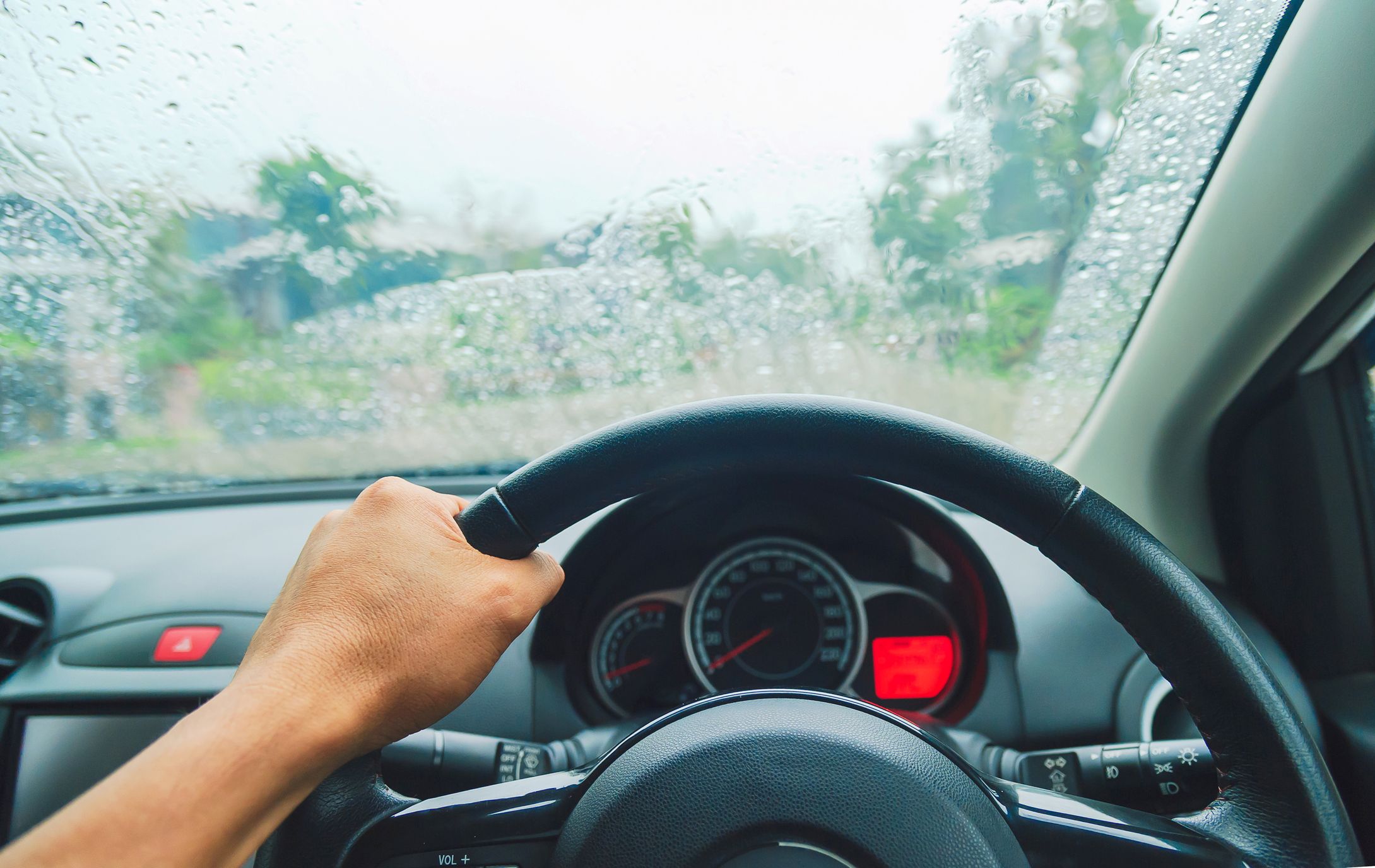
Rain doesn’t cause accidents…drivers do. While bad weather creates dangerous conditions, Pennsylvania law is clear: drivers are expected to adjust how they operate their vehicles based on those conditions. That means slowing down, increasing following distance, and maintaining full control of the vehicle at all times.
When those responsibilities aren’t met, liability comes into play, and that’s where many drivers misunderstand how fault is determined.
If you’ve been involved in a rain-related accident, knowing how fault works can make a significant difference in your case outcome.
How Pennsylvania Law Determines Fault in Rain-Related Accidents
In Pennsylvania, fault is not based on the weather, it’s based on driver behavior in response to the weather. When weather rolls in, drivers must take extra precautions in hazardous conditions, including rain, fog, and wet roadways.
Drivers are expected to:
- Reduce speed in hazardous conditions
- Maintain safe following distances
- Keep vehicles under control at all times
These are not just recommendations – they are expectations that directly impact liability in an accident.
Key Legal Standard: Negligence
At the core of every accident case is negligence. Negligence asks one simple question: Did the driver act reasonably given the conditions?
If a driver fails to adjust their driving for rain, they may be found negligent, even if the weather played a role in the crash.
Comparative Negligence in Pennsylvania
Pennsylvania uses a modified comparative negligence rule, which adds another layer to these cases.
- You can recover damages if you are 50% or less at fault
- Your compensation is reduced based on your percentage of fault
This is especially important in rain-related crashes, where insurance companies often try to argue that “everyone shares some blame.”
Common Types of Rain-Related Accidents & Who Is Usually at Fault
Rain impacts driving in several predictable ways, and certain types of accidents occur more frequently as a result. Understanding how fault is typically assigned in these scenarios can help you better evaluate your situation.
- Hydroplaning Accidents
Hydroplaning happens when a layer of water builds between your tires and the road, causing a loss of traction and control. It can feel sudden and unavoidable—but from a legal standpoint, it’s often preventable.
| Question: What Happens If Hydroplaning Caused My Accident? | Fault Consideration |
|---|---|
| Speed too high for conditions | Driver likely at fault |
| Worn tires or poor maintenance | Driver responsibility |
| Sudden unavoidable pooling | May reduce liability |
Even though hydroplaning feels like a loss of control, courts often view it differently. In many cases, it’s considered evidence that a driver was traveling too fast for conditions or failed to maintain their vehicle properly.
Bottom line: Hydroplaning is rarely seen as a “no-fault” event.
- Rear-End Collisions in the Rain
Rear-end accidents are one of the most common types of crashes during rainy conditions, and they are also one of the most straightforward when it comes to fault.
| Question: What Rear-End Collision Factors Come Into Play When Determining Accident Fault? | Likely Fault |
|---|---|
| Following too closely | Rear driver at fault |
| Sudden stop ahead | Still usually rear driver |
| Multi-car pileup | Shared liability possible |
Rain increases stopping distance significantly, which means drivers are expected to leave more space between vehicles. Failing to do so is often considered negligent behavior.
Even if the lead vehicle stops suddenly, the rear driver is typically held responsible for not maintaining a safe following distance.
- Poor Visibility Accidents
Heavy rain can dramatically reduce visibility, making it difficult to see road hazards, other vehicles, and traffic signals.
| Question: Who is at Fault In a Car Accident When There’s Poor Visibility? | Liability Insight |
|---|---|
| Failure to use headlights | Driver negligence |
| Driving too fast in low visibility | Driver at fault |
| Obstructed windshield or wipers | Maintenance issue |
Drivers are expected to adjust for visibility just as much as they are for road conditions. That includes using headlights, slowing down, and ensuring their vehicle is properly maintained.
When drivers fail to do these things, liability often follows.
- Road Condition & Third-Party Liability
Not every rain-related accident is solely the driver’s fault. In some cases, external factors contribute to the crash.
| Question: What Happens If Road Conditions Or A Vehicle Malfunction Caused My Accident? | Possible Liable Party |
|---|---|
| Poor drainage or flooding | Municipality |
| Road design defects | Government agency |
| Vehicle defects | Manufacturer |
For example, if a roadway consistently floods due to poor design or maintenance, a government entity may share responsibility. These cases are more complex and often require deeper investigation.
Rain Accident Statistics (Why This Matters)
Understanding how often rain contributes to accidents helps illustrate why these cases are so common, and why liability disputes arise so frequently.
According to the Federal Highway Administration:
| Road Condition | % Of Weather-Related Crashes |
|---|---|
| Wet pavement | ~70-74% |
| Rain | ~46-47% |
| Snow/Sleet | ~17-18% |
| Icy Pavement | ~12-13% |
What to Do After a Rain-Related Accident
What you do immediately after a crash can have a direct impact on your ability to prove fault and recover compensation.
Immediate Steps to Take:
- Call 911 and get a police report
- Seek medical attention
- Document the scene thoroughly
- Exchange information with other drivers
Taking these steps not only protects your health, it also helps preserve critical evidence.
Critical Evidence to Preserve in a Weather-Related Accident
Rain-related accidents often come down to details, which makes evidence especially important.
- Photos of road and weather conditions
- Skid marks or lack of braking
- Vehicle damage
- Witness statements
- Police reports
Weather reports from the exact time of the accident can also play a key role in proving how severe conditions were.
What NOT to Do:
- Do not admit fault at the scene
- Do not assume weather excuses liability
- Do not accept early insurance settlements
Insurance companies often move quickly after these accidents…and not in your favor.
How Insurance Companies Handle Rain-Related Claims
Insurance companies frequently try to shift blame in rain-related accidents by arguing that the weather, not the driver, caused the crash.
This is one of the most common tactics used to reduce payouts.
You may hear things like:
- “It was unavoidable due to rain”
- “No one is really at fault”
In reality, these arguments are often used to minimize liability. In most cases, a driver’s failure to adjust to conditions is still considered negligence.
Why Rain Makes Cases More Complex
Rain-related accident cases are rarely straightforward.
They often involve:
- Conflicting accounts of speed and distance
- Limited visibility evidence
- Shared fault arguments
Because of this, these cases frequently require deeper analysis, including accident reconstruction and expert input.
The more complex the conditions, the more important it is to build a strong, evidence-backed case.
FAQs About Rain-Related Car Accident Fault
Q: Who is at fault if someone hydroplanes and hits me?
A: In most cases, the driver who hydroplanes is considered at fault because they failed to maintain control of their vehicle.
Q: Are rear-end collisions always the rear driver’s fault in the rain?
A: Generally, yes, although exceptions can exist depending on the behavior of the lead driver.
Q: Can bad weather reduce liability?
A: Weather may influence how fault is shared, but it does not eliminate responsibility.
Q: What if both drivers were affected by rain?
A: Pennsylvania law allows fault to be divided between parties based on their level of responsibility.
Q: Can I still file a claim if I was partially at fault?
A: Yes. As long as you are less than 51% at fault, you can still recover compensation.
Final Takeaway: Rain Doesn’t Remove Responsibility
Rain may make driving more dangerous, but it also raises the standard of care expected from every driver on the road.
When someone fails to meet that standard, they can be held accountable.
Understanding this distinction is critical…not just for your safety, but for protecting your rights after an accident.
Why This Matters for Your Case
At GLS Injury Law, our car accident lawyers seen how quickly insurance companies try to shift blame to the weather.
But the reality is simple: Weather doesn’t cause negligence…people do.
And when someone else’s negligence leads to your injuries, you deserve full accountability. Injured in an accident? Our car accident attorneys are available 24/7 for free consultations…and if you can’t come to us, we will come to you.
References:
- Road Weather Management Program Report, U.S. Department of Transportation Federal Highway Administration, https://ops.fhwa.dot.gov/weather/roadimpact.htm